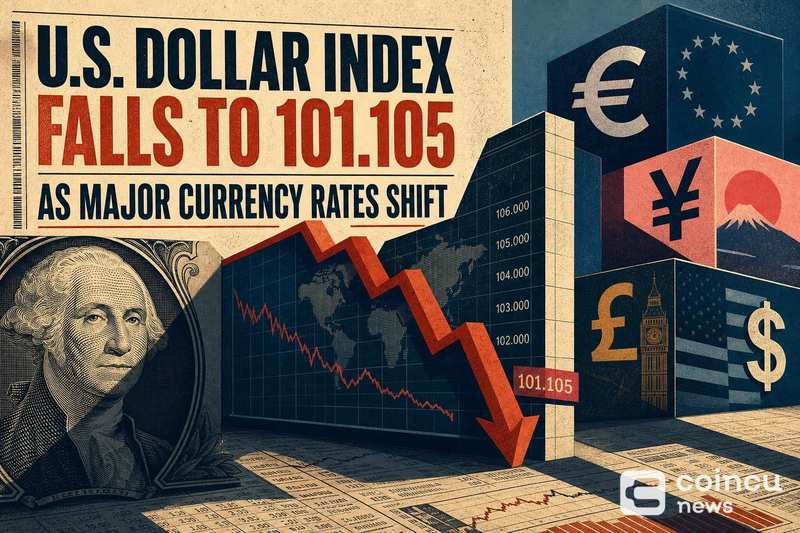
U.S. Dollar Index Falls to 101.105 as Major Currency Rates Shift
The U.S. Dollar Index fell to 101.105 as major currency rates shifted, marking a decline that signals broad dollar weakness against a basket of global currencies and draws attention from crypto market participants watching macro conditions.
What the 101.105 Reading Signals
The U.S. Dollar Index, commonly called DXY, measures the dollar’s value against a weighted basket of six major currencies. It is not a measure of the dollar in isolation but a relative gauge of how the greenback performs against counterparts including the euro, Japanese yen, British pound, Swiss franc, Canadian dollar, and Swedish krona. For related coverage, see Kraken to List Bittensor Subnet Alpha Token: What Is Confirmed.
A reading of 101.105 means the dollar weakened on a relative basis. The euro carries the heaviest weighting in the basket at roughly 57.6%, so euro strength alone can pull the index lower even if other pairs remain stable. For related coverage, see How Readers Compare 5 Online Casino Platforms in 2026.
Readings below 102 have historically represented softer dollar conditions compared to the elevated levels seen during recent tightening cycles, though context around monetary policy and trade dynamics matters more than any single print. For related coverage, see Betty Sweeps Casino 2026: Is It Still Active?.
Which Currencies Likely Drove the Decline
Because DXY is basket-weighted, its movements reflect the aggregate behavior of its component currencies rather than a single pair. The euro’s dominant weighting means that even a modest rally in EUR/USD can produce a visible drag on the index.
The Japanese yen and British pound are the next largest components. Yen strength, often driven by shifts in Bank of Japan policy expectations or risk-off flows, can compound euro-driven moves. The pound, while smaller in weighting, adds further directional pressure when sterling rallies against the dollar.
A simultaneous move across multiple basket components, rather than an isolated spike in one currency, tends to produce the kind of broad decline reflected in a reading like 101.105.
What Dollar Weakness Could Mean for Bitcoin and Crypto
Crypto traders track the DXY because dollar weakness often coincides with improved risk appetite across speculative assets. When the dollar loses purchasing power relative to other fiat currencies, capital can rotate toward alternative stores of value including Bitcoin.
The relationship is not mechanical. A falling DXY does not guarantee crypto rallies, and periods of dollar weakness have sometimes coincided with broad risk-off environments where both equities and crypto declined together.
What matters more than the direction of DXY is the reason behind the move. Dollar weakness driven by easing financial conditions tends to be more supportive for crypto than weakness driven by geopolitical instability or loss of confidence in U.S. fiscal policy. Monitoring global crypto market capitalization trends alongside DXY can help traders assess whether macro conditions are translating into actual crypto inflows.
Broader developments in crypto regulation and on-chain transparency, such as efforts by firms like Chainalysis to build on-chain tracking standards, also shape how institutional capital responds to macro signals like dollar weakness.
What Traders Should Watch After This Reading
The first signal to monitor is whether the decline extends below the 100 level, a psychologically significant threshold that would mark a deeper shift in dollar sentiment. A sustained break below 100 would suggest structural rather than tactical weakness.
Reversal signals include hawkish Federal Reserve commentary, stronger-than-expected U.S. economic data, or a risk-off shock that drives safe-haven flows back into the dollar. Any of these could push DXY back above 102 and unwind the current move.
For crypto-specific spillover, traders should watch whether Bitcoin and Ethereum respond to continued dollar softness with sustained buying or whether the correlation breaks down. The Fear and Greed Index can provide a quick read on whether broader crypto sentiment is shifting alongside the macro backdrop.
Government-level crypto activity, including moves like Ukraine’s recent transfer of seized USDT to state management, can also influence how markets interpret the intersection of fiat weakness and digital asset adoption.
FAQ: U.S. Dollar Index and Crypto Impact
What does the U.S. Dollar Index measure?
DXY measures the dollar’s strength against a basket of six major currencies, with the euro carrying the largest weight. It reflects relative performance, not absolute purchasing power.
Why does 101.105 matter?
The level places the dollar in a weaker range compared to recent years. While no single reading is decisive, readings near or below 101 suggest the dollar is losing ground against its major trading partners.
Is a falling dollar always bullish for crypto?
Not always. Dollar weakness can support crypto by improving risk appetite and making dollar-denominated assets relatively cheaper for foreign buyers. However, the cause of the weakness matters. DXY is one macro input among many, and crypto prices respond to a combination of on-chain activity, regulatory developments, and market-specific catalysts rather than any single index.
Disclaimer: This article is for informational purposes only and does not constitute financial or investment advice. Cryptocurrency and digital asset markets carry significant risk. Always do your own research before making decisions.
No tags available.


Other Posts








- China, US Conclude Trade Talks with Focus on Cooperation
- Crypto Weekly: NYSE Backs OKX, Kraken Gets Fed Access, BTC Sells
- DeriW Launches Edge Hour Trading Competition Platform for Derivatives Traders
- Court Upholds Fed’s Rejection of Custodia Bank’s Request
- Former CFO Convicted for $35M Fraudulent Crypto Investment
- Michael Saylor Denies Bitcoin Sell-Off Amid Large BTC Transfer
- Buy Dogecoin on eToro: Step-by-Step Guide for Beginners (2024)
- Kazakhstan Explores Crypto Reserves Backed by National Funds
- JPMorgan Increases Holdings in BlackRock’s Bitcoin ETF
- Nordea Bank Introduces Bitcoin ETP Trading for Nordic Customers
- XRP Spot ETF Launches on Nasdaq Amid Market Fluctuations
- Crypto Leaders Address Macro Volatility Amid Market Shifts
- Peter Schiff Challenges Michael Saylor on MSTR’s Business Model
- Thailand Orders Worldcoin to Delete 1.2 Million Biometric Records
- UK Proposes New DeFi Tax Framework to Ease User Burden
- WLFI Under Fire: Analyst Warns Hyperliquid Could Be Next
- Ancient Ethereum Whale Moves $1.19 Billion After Decade
- BlackRock Receives Large Crypto Transfers from Coinbase
- SEC Scrutiny on ALT5 Sigma’s Leadership Disclosure Timing
- MoonPay Gains Trust License for Crypto Operations in New York
- China, US Conclude Trade Talks with Focus on Cooperation
- Crypto Weekly: NYSE Backs OKX, Kraken Gets Fed Access, BTC Sells
- DeriW Launches Edge Hour Trading Competition Platform for Derivatives Traders
- Court Upholds Fed’s Rejection of Custodia Bank’s Request
- Former CFO Convicted for $35M Fraudulent Crypto Investment
- Michael Saylor Denies Bitcoin Sell-Off Amid Large BTC Transfer
- Buy Dogecoin on eToro: Step-by-Step Guide for Beginners (2024)
- Kazakhstan Explores Crypto Reserves Backed by National Funds
- JPMorgan Increases Holdings in BlackRock’s Bitcoin ETF
- Nordea Bank Introduces Bitcoin ETP Trading for Nordic Customers
- XRP Spot ETF Launches on Nasdaq Amid Market Fluctuations
- Crypto Leaders Address Macro Volatility Amid Market Shifts
- Peter Schiff Challenges Michael Saylor on MSTR’s Business Model
- Thailand Orders Worldcoin to Delete 1.2 Million Biometric Records
- UK Proposes New DeFi Tax Framework to Ease User Burden
- WLFI Under Fire: Analyst Warns Hyperliquid Could Be Next
- Ancient Ethereum Whale Moves $1.19 Billion After Decade
- BlackRock Receives Large Crypto Transfers from Coinbase
- SEC Scrutiny on ALT5 Sigma’s Leadership Disclosure Timing
- MoonPay Gains Trust License for Crypto Operations in New York
- China, US Conclude Trade Talks with Focus on Cooperation
- Crypto Weekly: NYSE Backs OKX, Kraken Gets Fed Access, BTC Sells
- DeriW Launches Edge Hour Trading Competition Platform for Derivatives Traders
- Court Upholds Fed’s Rejection of Custodia Bank’s Request
- Former CFO Convicted for $35M Fraudulent Crypto Investment
- Michael Saylor Denies Bitcoin Sell-Off Amid Large BTC Transfer
- Buy Dogecoin on eToro: Step-by-Step Guide for Beginners (2024)
- Kazakhstan Explores Crypto Reserves Backed by National Funds
- JPMorgan Increases Holdings in BlackRock’s Bitcoin ETF
- Nordea Bank Introduces Bitcoin ETP Trading for Nordic Customers
- XRP Spot ETF Launches on Nasdaq Amid Market Fluctuations
- Crypto Leaders Address Macro Volatility Amid Market Shifts
- Peter Schiff Challenges Michael Saylor on MSTR’s Business Model
- Thailand Orders Worldcoin to Delete 1.2 Million Biometric Records
- UK Proposes New DeFi Tax Framework to Ease User Burden
- WLFI Under Fire: Analyst Warns Hyperliquid Could Be Next
- Ancient Ethereum Whale Moves $1.19 Billion After Decade
- BlackRock Receives Large Crypto Transfers from Coinbase
- SEC Scrutiny on ALT5 Sigma’s Leadership Disclosure Timing
- MoonPay Gains Trust License for Crypto Operations in New York

U.S. Dollar Index Falls to 101.105 as Major Currency Rates Shift

Chainalysis Plans On-Chain Tracking Standards System With Address Clustering Ontology

Kraken to List Bittensor Subnet Alpha Token: What Is Confirmed
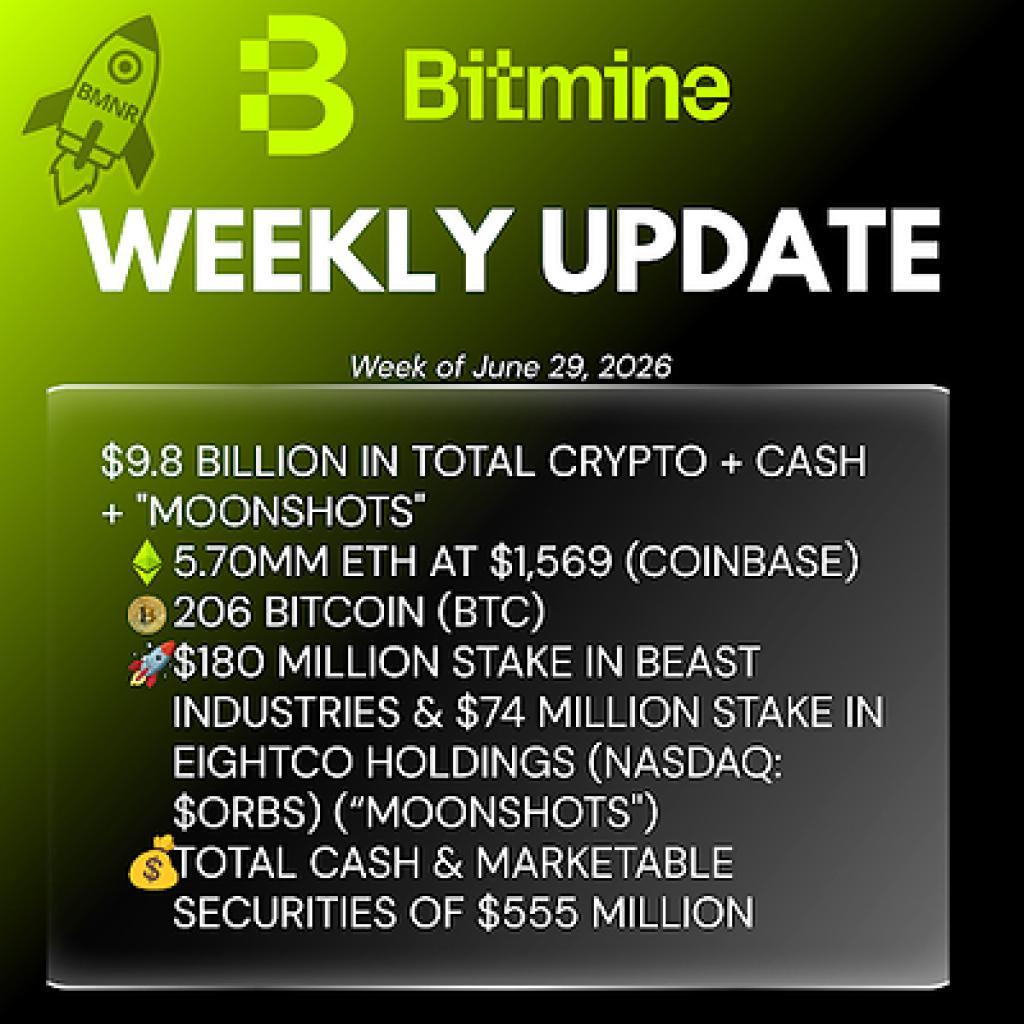
Bitmine Immersion Technologies (BMNR) Announces ETH Holdings Reach 5.70 Million Tokens, and Total Crypto and Total Cash Holdings of $9.8 Billion

Toss Brings 30 Million Users Into the AI Data Economy in Partnership With Poseidon