Malaysian Police Dismantle Illegal Crypto Mining Dens in Port Klang Free Trade Zone
Malaysian police raided and dismantled illegal cryptocurrency mining dens operating inside the Port Klang Free Trade Zone, arresting suspects linked to large-scale electricity theft that has cost the country billions in lost revenue.
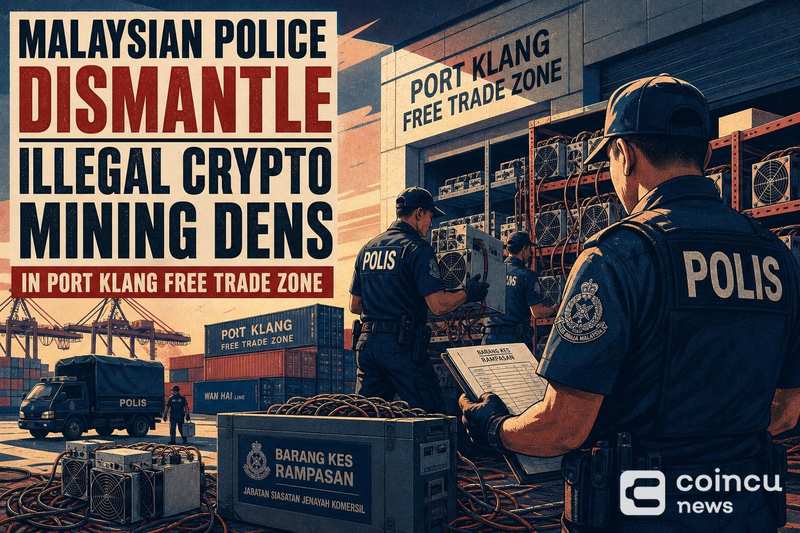
Police move on crypto mining dens in Port Klang Free Trade Zone
Authorities conducted enforcement operations targeting illegal cryptocurrency mining facilities hidden within the Port Klang Free Trade Zone, according to a report by The Star. Police nabbed suspects for electricity theft connected to the unauthorized mining operations in the free zone area. For related coverage, see AI.com sells for $70M to Crypto.com CEO Marszalek.
The raid resulted in the dismantling of mining dens that had been running covertly inside the industrial zone. New Straits Times reported that the crypto mining operation was busted during the Klang raid, with authorities seizing equipment on site. For related coverage, see Alleged 50,000 USDT Seizure by Malaysian Police Faces Slow Progress.
The operation adds to a pattern of Malaysian enforcement actions against illegal mining. Earlier in 2026, the Suruhanjaya Tenaga (Energy Commission) seized Bitcoin mining machines worth over RM2 million in an integrated operation codenamed OPS RENJAT. For related coverage, see AirAsia Operator Engages Standard Chartered To Test Malaysian Ringgit Stablecoin.
Electricity theft at the center of the case
The core allegation against the operators is electricity theft, not cryptocurrency mining itself. Malaysian law treats unauthorized power consumption as a criminal offense, and mining rigs draw enormous amounts of electricity, making stolen power the primary incentive for concealing operations.
The suspects were reportedly bypassing or tampering with electrical infrastructure to power the mining equipment without paying utility costs. This mirrors a broader national problem where Malaysia has lost an estimated $1.1 billion to electricity theft driven by illegal crypto mining operations.
That figure, which covers cumulative losses reported by Malaysian authorities, underscores why enforcement agencies have escalated crackdowns in industrial zones and warehouses across the country. The scale of power theft has drawn attention from regional media outlets covering the drain on Malaysia’s energy infrastructure.
Why Port Klang’s free trade zone drew illegal miners
The Port Klang Free Trade Zone is one of Malaysia’s largest industrial and logistics hubs, with extensive warehouse infrastructure and high-capacity power connections designed for commercial operations. These features make it attractive for concealing energy-intensive mining rigs among legitimate industrial tenants.
Large warehouse spaces allow operators to house hundreds of machines while the constant hum of industrial activity helps mask the noise and heat signatures that mining hardware produces. The zone’s scale also complicates routine inspections, giving illegal operations more time before detection.
This is not the first time Malaysian authorities have dealt with cryptocurrency-related enforcement challenges. In a separate case, an alleged 50,000 USDT seizure by Malaysian police highlighted the complications law enforcement faces when dealing with digital asset cases.
Malaysia’s escalating enforcement against illegal mining
Malaysian authorities have intensified operations against unauthorized crypto mining facilities over the past several years, framing the issue primarily as energy theft and infrastructure damage rather than a cryptocurrency-specific crackdown.
The Electricity Supply Act provides the legal basis for prosecuting operators who tamper with meters or bypass grid connections. Convictions can carry fines and imprisonment, with utility companies also pursuing civil recovery for stolen power.
The OPS RENJAT operations, conducted jointly by police and the Energy Commission, have become a recurring enforcement mechanism. The February 2026 seizure of mining machines worth over RM2 million demonstrated the scale of equipment being deployed in these illegal setups.
Meanwhile, Malaysia’s government has also pursued legitimate blockchain industry engagement. Malaysian PM and Binance founder recently boosted blockchain collaboration, signaling that authorities are distinguishing between regulated crypto activity and criminal operations that steal public resources.
The broader regulatory environment in Southeast Asia continues to evolve, with exchanges seeking compliant footholds across the region. OKX’s recent launch of compliant exchanges in Europe reflects the global trend toward regulated crypto infrastructure, a contrast to the underground operations dismantled in Port Klang.
FAQ
What was raided in the Port Klang Free Trade Zone?
Malaysian police raided illegal cryptocurrency mining dens operating inside the Port Klang Free Trade Zone. The facilities were using stolen electricity to power mining equipment and were dismantled during the enforcement operation.
Why are these crypto mining operations considered illegal?
The operations are illegal primarily because they relied on electricity theft, which violates Malaysia’s Electricity Supply Act. Operating unauthorized power-intensive facilities by tampering with electrical infrastructure is a criminal offense regardless of what the electricity is used for.
What did authorities seize or shut down?
Authorities arrested suspects and dismantled the mining dens. In a related earlier operation in February 2026, the Energy Commission seized Bitcoin mining machines worth over RM2 million during OPS RENJAT. The full scope of equipment seized in the Port Klang raid has been reported by local media covering the enforcement action.
Disclaimer: This article is for informational purposes only and does not constitute financial or investment advice. Cryptocurrency and digital asset markets carry significant risk. Always do your own research before making decisions.
No tags available.


Other Posts








- China, US Conclude Trade Talks with Focus on Cooperation
- Crypto Weekly: NYSE Backs OKX, Kraken Gets Fed Access, BTC Sells
- DeriW Launches Edge Hour Trading Competition Platform for Derivatives Traders
- Court Upholds Fed’s Rejection of Custodia Bank’s Request
- Former CFO Convicted for $35M Fraudulent Crypto Investment
- Michael Saylor Denies Bitcoin Sell-Off Amid Large BTC Transfer
- Buy Dogecoin on eToro: Step-by-Step Guide for Beginners (2024)
- Kazakhstan Explores Crypto Reserves Backed by National Funds
- JPMorgan Increases Holdings in BlackRock’s Bitcoin ETF
- Nordea Bank Introduces Bitcoin ETP Trading for Nordic Customers
- XRP Spot ETF Launches on Nasdaq Amid Market Fluctuations
- Peter Schiff Challenges Michael Saylor on MSTR’s Business Model
- Thailand Orders Worldcoin to Delete 1.2 Million Biometric Records
- UK Proposes New DeFi Tax Framework to Ease User Burden
- WLFI Under Fire: Analyst Warns Hyperliquid Could Be Next
- Ancient Ethereum Whale Moves $1.19 Billion After Decade
- BlackRock Receives Large Crypto Transfers from Coinbase
- SEC Scrutiny on ALT5 Sigma’s Leadership Disclosure Timing
- Yala Injects $5.5 Million Amid Recovery Efforts
- Radiant Capital Faces $50M Loss in Major Security Breach
- China, US Conclude Trade Talks with Focus on Cooperation
- Crypto Weekly: NYSE Backs OKX, Kraken Gets Fed Access, BTC Sells
- DeriW Launches Edge Hour Trading Competition Platform for Derivatives Traders
- Court Upholds Fed’s Rejection of Custodia Bank’s Request
- Former CFO Convicted for $35M Fraudulent Crypto Investment
- Michael Saylor Denies Bitcoin Sell-Off Amid Large BTC Transfer
- Buy Dogecoin on eToro: Step-by-Step Guide for Beginners (2024)
- Kazakhstan Explores Crypto Reserves Backed by National Funds
- JPMorgan Increases Holdings in BlackRock’s Bitcoin ETF
- Nordea Bank Introduces Bitcoin ETP Trading for Nordic Customers
- XRP Spot ETF Launches on Nasdaq Amid Market Fluctuations
- Peter Schiff Challenges Michael Saylor on MSTR’s Business Model
- Thailand Orders Worldcoin to Delete 1.2 Million Biometric Records
- UK Proposes New DeFi Tax Framework to Ease User Burden
- WLFI Under Fire: Analyst Warns Hyperliquid Could Be Next
- Ancient Ethereum Whale Moves $1.19 Billion After Decade
- BlackRock Receives Large Crypto Transfers from Coinbase
- SEC Scrutiny on ALT5 Sigma’s Leadership Disclosure Timing
- Yala Injects $5.5 Million Amid Recovery Efforts
- Radiant Capital Faces $50M Loss in Major Security Breach
- China, US Conclude Trade Talks with Focus on Cooperation
- Crypto Weekly: NYSE Backs OKX, Kraken Gets Fed Access, BTC Sells
- DeriW Launches Edge Hour Trading Competition Platform for Derivatives Traders
- Court Upholds Fed’s Rejection of Custodia Bank’s Request
- Former CFO Convicted for $35M Fraudulent Crypto Investment
- Michael Saylor Denies Bitcoin Sell-Off Amid Large BTC Transfer
- Buy Dogecoin on eToro: Step-by-Step Guide for Beginners (2024)
- Kazakhstan Explores Crypto Reserves Backed by National Funds
- JPMorgan Increases Holdings in BlackRock’s Bitcoin ETF
- Nordea Bank Introduces Bitcoin ETP Trading for Nordic Customers
- XRP Spot ETF Launches on Nasdaq Amid Market Fluctuations
- Peter Schiff Challenges Michael Saylor on MSTR’s Business Model
- Thailand Orders Worldcoin to Delete 1.2 Million Biometric Records
- UK Proposes New DeFi Tax Framework to Ease User Burden
- WLFI Under Fire: Analyst Warns Hyperliquid Could Be Next
- Ancient Ethereum Whale Moves $1.19 Billion After Decade
- BlackRock Receives Large Crypto Transfers from Coinbase
- SEC Scrutiny on ALT5 Sigma’s Leadership Disclosure Timing
- Yala Injects $5.5 Million Amid Recovery Efforts
- Radiant Capital Faces $50M Loss in Major Security Breach

Malaysian Police Dismantle Illegal Crypto Mining Dens in Port Klang Free Trade Zone