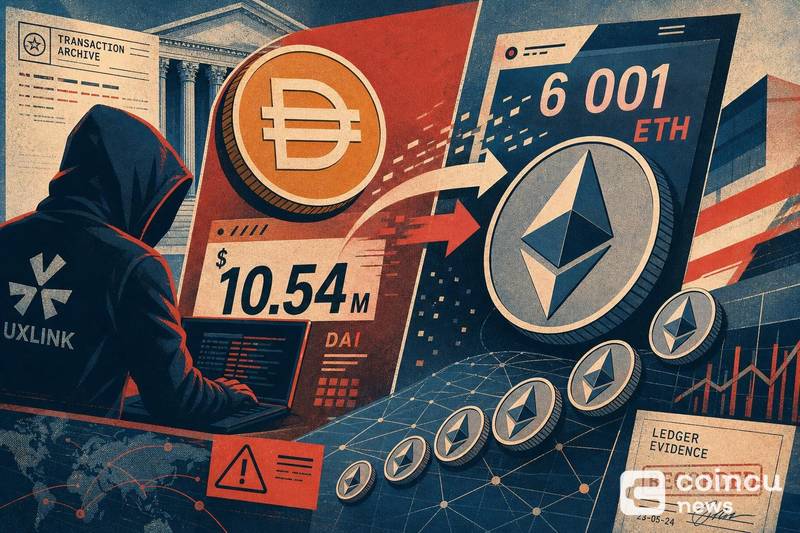
The hacker behind the UXLINK exploit has converted $10.54 million in DAI into 6,001 ETH, signaling a new phase in the movement of stolen funds from one of the most closely watched crypto security incidents of recent months.
What Happened in the UXLINK Hacker’s DAI-to-ETH Swap
The attacker linked to the UXLINK security breach swapped $10.54 million worth of the DAI stablecoin for 6,001 ETH, then routed the proceeds through Tornado Cash, a privacy-focused mixing protocol frequently used to obscure on-chain fund trails.
This is not the first time the UXLINK attacker has executed a large-scale token conversion. In a previous transaction, the same actor swapped 14.6 million DAI for 8,298.6 ETH, establishing a pattern of converting stablecoin holdings into Ethereum before laundering.
The UXLINK breach itself has been a multifaceted incident. The UXLINK CEO reported an $11 million theft involving a deepfake attack, and the fallout prompted South Korean exchanges Upbit and Bithumb to suspend UXLINK trading.
Why Converting DAI to ETH Matters for Fund Tracing
DAI is a dollar-pegged stablecoin, meaning its value remains stable and its on-chain movements are relatively straightforward to track. ETH, by contrast, is more volatile and more liquid, offering the attacker greater flexibility to distribute, mix, or further convert funds.
The decision to swap into ETH before using Tornado Cash follows a well-documented playbook. Stablecoin issuers like MakerDAO can technically freeze or blacklist specific DAI holdings, making it risky for an attacker to hold large stablecoin positions for extended periods.
Converting to ETH removes that centralized freezing risk. Once ETH enters a mixing protocol, tracing individual units back to the original theft becomes significantly more difficult for on-chain investigators.
Implications for UXLINK and Its Community
Each new fund movement reinforces the scale of the UXLINK breach and keeps the incident in public focus. The project has already taken steps to respond, including planning a token contract migration to mitigate further damage from the compromised infrastructure.
For UXLINK token holders and users, the continued movement of stolen funds raises questions about recovery prospects. Once assets pass through mixing protocols, the likelihood of recovery drops substantially.
The broader pattern of the attacker’s behavior, converting large tranches of stablecoins to ETH in repeated swaps, has not always been profitable for the hacker, as market timing and slippage on large swaps can erode the value of stolen funds.
How On-Chain Analysts Monitor These Movements
Wallet addresses linked to the UXLINK exploit are publicly flagged and monitored by blockchain security firms. Every swap, transfer, or interaction with a DeFi protocol generates a permanent, auditable record on the Ethereum blockchain.
The use of Tornado Cash adds a layer of complexity but does not guarantee anonymity. Law enforcement and analytics firms have developed methods to probabilistically link deposits and withdrawals from mixing protocols, particularly for large or distinctive amounts.
This latest swap of $10.54 million represents one transaction in what is likely to be a longer series. Security incidents of this scale, as recent reporting on crypto hackers losing money has shown, often play out over weeks or months as attackers attempt to gradually liquidate stolen assets without triggering exchange freezes or law enforcement intervention.
FAQ About the UXLINK Hacker’s 6,001 ETH Swap
How much was swapped? The attacker converted $10.54 million in DAI into 6,001 ETH in a single on-chain transaction.
Why swap DAI for ETH? ETH is more liquid and cannot be frozen by a centralized issuer, unlike stablecoins. Converting to ETH before using a mixer like Tornado Cash is a common tactic to reduce the risk of asset seizure.
What should observers watch for next? Further withdrawals from Tornado Cash linked to the flagged addresses, additional token swaps, and any movement toward centralized exchanges where the funds could potentially be frozen or seized.
Disclaimer: This article is for informational purposes only and does not constitute financial or investment advice. Cryptocurrency and digital asset markets carry significant risk. Always do your own research before making decisions.
No tags available.


Other Posts








- China, US Conclude Trade Talks with Focus on Cooperation
- Crypto Weekly: NYSE Backs OKX, Kraken Gets Fed Access, BTC Sells
- DeriW Launches Edge Hour Trading Competition Platform for Derivatives Traders
- Court Upholds Fed’s Rejection of Custodia Bank’s Request
- Former CFO Convicted for $35M Fraudulent Crypto Investment
- Michael Saylor Denies Bitcoin Sell-Off Amid Large BTC Transfer
- Buy Dogecoin on eToro: Step-by-Step Guide for Beginners (2024)
- Kazakhstan Explores Crypto Reserves Backed by National Funds
- JPMorgan Increases Holdings in BlackRock’s Bitcoin ETF
- Nordea Bank Introduces Bitcoin ETP Trading for Nordic Customers
- XRP Spot ETF Launches on Nasdaq Amid Market Fluctuations
- Peter Schiff Challenges Michael Saylor on MSTR’s Business Model
- Thailand Orders Worldcoin to Delete 1.2 Million Biometric Records
- UK Proposes New DeFi Tax Framework to Ease User Burden
- WLFI Under Fire: Analyst Warns Hyperliquid Could Be Next
- Ancient Ethereum Whale Moves $1.19 Billion After Decade
- BlackRock Receives Large Crypto Transfers from Coinbase
- SEC Scrutiny on ALT5 Sigma’s Leadership Disclosure Timing
- Yala Injects $5.5 Million Amid Recovery Efforts
- Radiant Capital Faces $50M Loss in Major Security Breach
- China, US Conclude Trade Talks with Focus on Cooperation
- Crypto Weekly: NYSE Backs OKX, Kraken Gets Fed Access, BTC Sells
- DeriW Launches Edge Hour Trading Competition Platform for Derivatives Traders
- Court Upholds Fed’s Rejection of Custodia Bank’s Request
- Former CFO Convicted for $35M Fraudulent Crypto Investment
- Michael Saylor Denies Bitcoin Sell-Off Amid Large BTC Transfer
- Buy Dogecoin on eToro: Step-by-Step Guide for Beginners (2024)
- Kazakhstan Explores Crypto Reserves Backed by National Funds
- JPMorgan Increases Holdings in BlackRock’s Bitcoin ETF
- Nordea Bank Introduces Bitcoin ETP Trading for Nordic Customers
- XRP Spot ETF Launches on Nasdaq Amid Market Fluctuations
- Peter Schiff Challenges Michael Saylor on MSTR’s Business Model
- Thailand Orders Worldcoin to Delete 1.2 Million Biometric Records
- UK Proposes New DeFi Tax Framework to Ease User Burden
- WLFI Under Fire: Analyst Warns Hyperliquid Could Be Next
- Ancient Ethereum Whale Moves $1.19 Billion After Decade
- BlackRock Receives Large Crypto Transfers from Coinbase
- SEC Scrutiny on ALT5 Sigma’s Leadership Disclosure Timing
- Yala Injects $5.5 Million Amid Recovery Efforts
- Radiant Capital Faces $50M Loss in Major Security Breach
- China, US Conclude Trade Talks with Focus on Cooperation
- Crypto Weekly: NYSE Backs OKX, Kraken Gets Fed Access, BTC Sells
- DeriW Launches Edge Hour Trading Competition Platform for Derivatives Traders
- Court Upholds Fed’s Rejection of Custodia Bank’s Request
- Former CFO Convicted for $35M Fraudulent Crypto Investment
- Michael Saylor Denies Bitcoin Sell-Off Amid Large BTC Transfer
- Buy Dogecoin on eToro: Step-by-Step Guide for Beginners (2024)
- Kazakhstan Explores Crypto Reserves Backed by National Funds
- JPMorgan Increases Holdings in BlackRock’s Bitcoin ETF
- Nordea Bank Introduces Bitcoin ETP Trading for Nordic Customers
- XRP Spot ETF Launches on Nasdaq Amid Market Fluctuations
- Peter Schiff Challenges Michael Saylor on MSTR’s Business Model
- Thailand Orders Worldcoin to Delete 1.2 Million Biometric Records
- UK Proposes New DeFi Tax Framework to Ease User Burden
- WLFI Under Fire: Analyst Warns Hyperliquid Could Be Next
- Ancient Ethereum Whale Moves $1.19 Billion After Decade
- BlackRock Receives Large Crypto Transfers from Coinbase
- SEC Scrutiny on ALT5 Sigma’s Leadership Disclosure Timing
- Yala Injects $5.5 Million Amid Recovery Efforts
- Radiant Capital Faces $50M Loss in Major Security Breach


Malaysian Police Dismantle Illegal Crypto Mining Dens in Port Klang Free Trade Zone