The European Commission has launched a targeted consultation on whether to expand the Markets in Crypto-Assets Regulation to cover tokenization and non-EU stablecoin issuers, signaling that the bloc’s landmark crypto framework may soon grow broader in scope.
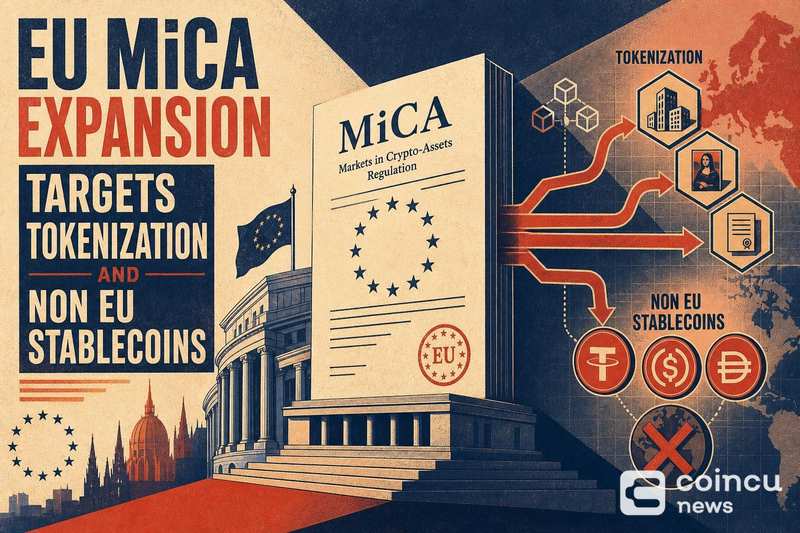
The consultation, published by the European Commission on May 20, 2026, seeks industry feedback on how the EU’s crypto-asset rules are functioning and where gaps remain. Two areas stand out in the review: the regulatory treatment of tokenized assets and the supervision of stablecoin issuers based outside the EU. For related coverage, see Paradigm Raises $1.2 Billion Fund Focused on AI and Crypto.
What the EU’s Planned MiCA Expansion Is Targeting
MiCA, which took full effect in late 2024, established a unified licensing and compliance framework for crypto-asset service providers and issuers across the European Union. It covers crypto-asset offerings, trading platforms, custody providers, and stablecoin issuance within the bloc. The regulation was a first-of-its-kind effort among major economies, and its implementation has so far resulted in dozens of authorized stablecoin issuers and hundreds of licensed service providers.
The current review targets two distinct areas where the Commission believes MiCA’s original scope may fall short. The first is tokenization, the process of representing real-world assets such as bonds, real estate, or fund shares as blockchain-based tokens. The second is the treatment of stablecoin issuers headquartered outside the EU that nonetheless serve European users.
Tokenization Under the Regulatory Lens
Tokenization sits at the intersection of traditional finance and crypto infrastructure. While MiCA was designed to regulate crypto-native assets, the rapid growth of tokenized securities, commodities, and other financial instruments has raised questions about whether these hybrid products fit neatly within the existing framework.
The Commission’s targeted consultation document asks stakeholders to identify where tokenized assets may escape regulatory coverage or create ambiguity between MiCA and existing financial services directives such as MiFID II. This parallel effort mirrors activity in the United States, where the SEC’s 2026 regulatory agenda has also placed tokenized securities at the center of its rulemaking priorities.
Non-EU Stablecoin Issuers
The second expansion front addresses stablecoins issued by entities outside the EU. Under MiCA’s current rules, stablecoin issuers serving EU markets must be established and authorized within the bloc. In practice, enforcement of this requirement against offshore issuers has been uneven, and major dollar-denominated stablecoins issued by non-EU companies continue to circulate widely across European exchanges and wallets.
The consultation asks whether additional supervisory tools are needed to ensure non-EU issuers meet equivalent standards, or whether market access restrictions should be tightened further.
Why Tokenization Could Become a Bigger MiCA Priority
Tokenization refers to the creation of digital representations of traditional assets on a blockchain. These can range from government bonds and corporate debt to real estate shares and fund units. The appeal is faster settlement, broader investor access, and programmable compliance, but regulators are concerned about classification gaps.
A tokenized bond, for instance, may qualify as a financial instrument under MiFID II while also meeting MiCA’s definition of a crypto-asset. The consultation seeks clarity on how overlapping frameworks should interact and whether MiCA needs explicit provisions for tokenized financial instruments.
Infrastructure providers are already positioning for expanded tokenization rules. The DTCC has been working toward tokenized-asset trading capabilities with input from major firms including BlackRock and Circle, underscoring that institutional interest in this space is accelerating ahead of regulatory clarity.
Compliance Questions for Tokenization Projects
Projects issuing tokenized assets in the EU face an uncertain compliance landscape. If MiCA is expanded to explicitly cover tokenization, issuers may need to obtain specific authorizations, meet disclosure requirements tailored to the underlying asset class, and ensure their smart contracts comply with EU consumer protection standards.
The consultation document asks whether a new sub-category of crypto-asset should be created for tokenized instruments, or whether existing MiCA classifications can be adapted. The outcome will determine whether tokenization platforms need separate licenses or can operate under current CASP authorizations.
How Non-EU Stablecoin Issuers Could Face New Scrutiny
Non-EU stablecoin issuers are entities incorporated outside the European Union that issue stablecoins used by European traders, businesses, and consumers. The most prominent examples are dollar-backed stablecoins issued by companies based in the United States or other jurisdictions that have not sought MiCA authorization.
MiCA already restricts the issuance of significant stablecoins to EU-authorized entities. However, the Commission’s review suggests that enforcement may need strengthening, particularly around stablecoins that enter the EU market through third-party exchanges or decentralized protocols rather than direct issuance.
The July 2025 MiCA compliance deadline already forced a number of crypto firms to either obtain licenses or exit the European market. Expanding oversight to non-EU stablecoin issuers could trigger a similar wave of compliance decisions among offshore stablecoin providers.
Effects on Exchanges, Wallets, and European Users
If the EU tightens rules on non-EU stablecoins, the most immediate impact would fall on exchanges and wallet providers operating in Europe. These platforms would likely need to delist or restrict access to stablecoins that do not meet the new requirements, potentially reducing liquidity in certain trading pairs.
European users who hold or transact in non-compliant stablecoins could face limitations on withdrawals, conversions, or cross-border transfers. The consultation asks whether transitional arrangements should be provided to avoid market disruption.
What the Shift Could Mean for Crypto Firms and Investors
In the near term, the consultation itself creates no new obligations. The Commission is gathering feedback through the targeted consultation period, and any legislative changes would require a formal proposal, parliamentary review, and implementation timeline that could stretch well into 2027 or beyond.
For crypto firms operating in or serving the EU, however, the direction of travel is clear. Companies involved in tokenization or stablecoin issuance outside the EU should begin assessing whether their products and services would fall within an expanded MiCA scope.
The European Systemic Risk Board has separately flagged crypto-related systemic risks as an area requiring ongoing attention, adding macroprudential weight to the Commission’s regulatory review.
What Firms Should Monitor Next
The consultation’s closing date and the Commission’s subsequent report will set the timeline for any formal legislative proposal. Firms should watch for the publication of consultation responses and the Commission’s summary findings, which will indicate whether an expanded MiCA proposal is likely in 2027.
Industry associations and trade groups in Europe are expected to submit detailed responses. The degree of pushback or support from major market participants will shape whether the expansion proceeds on a broad or narrow basis.
FAQ: EU MiCA Expansion, Tokenization, and Stablecoins
Does MiCA Already Cover Tokenization?
MiCA covers crypto-assets broadly, but its treatment of tokenized versions of traditional financial instruments remains ambiguous. The current review is specifically asking whether new provisions are needed to address tokenized securities, bonds, and other real-world asset representations that may fall between MiCA and existing financial regulations like MiFID II.
Can Non-EU Stablecoins Still Be Used by European Residents?
At present, non-EU stablecoins remain accessible on many platforms serving European users, though MiCA’s existing rules technically restrict unauthorized stablecoin issuance for the EU market. The consultation is exploring whether enforcement should be strengthened and whether exchanges should face stricter obligations to delist non-compliant stablecoins.
When Could These Changes Take Effect?
The consultation is a preliminary step. Any formal legislative proposal would need to go through the EU’s co-legislative process involving the European Parliament and Council of the EU. Based on typical legislative timelines, substantive MiCA amendments resulting from this review would unlikely take effect before late 2027 at the earliest.
What Should Crypto Firms Do Now?
Firms should review the consultation document, consider submitting feedback, and assess whether their tokenization or stablecoin products could be affected by an expanded scope. Early engagement with the consultation process offers the best opportunity to influence the final regulatory outcome.
Disclaimer: This article is for informational purposes only and does not constitute financial or investment advice. Cryptocurrency and digital asset markets carry significant risk. Always do your own research before making decisions.
No tags available.


Other Posts








- China, US Conclude Trade Talks with Focus on Cooperation
- Crypto Weekly: NYSE Backs OKX, Kraken Gets Fed Access, BTC Sells
- Court Upholds Fed’s Rejection of Custodia Bank’s Request
- DeriW Launches Edge Hour Trading Competition Platform for Derivatives Traders
- Former CFO Convicted for $35M Fraudulent Crypto Investment
- Michael Saylor Denies Bitcoin Sell-Off Amid Large BTC Transfer
- Buy Dogecoin on eToro: Step-by-Step Guide for Beginners (2024)
- Kazakhstan Explores Crypto Reserves Backed by National Funds
- JPMorgan Increases Holdings in BlackRock’s Bitcoin ETF
- Nordea Bank Introduces Bitcoin ETP Trading for Nordic Customers
- XRP Spot ETF Launches on Nasdaq Amid Market Fluctuations
- Peter Schiff Challenges Michael Saylor on MSTR’s Business Model
- Thailand Orders Worldcoin to Delete 1.2 Million Biometric Records
- UK Proposes New DeFi Tax Framework to Ease User Burden
- WLFI Under Fire: Analyst Warns Hyperliquid Could Be Next
- Ancient Ethereum Whale Moves $1.19 Billion After Decade
- BlackRock Receives Large Crypto Transfers from Coinbase
- SEC Scrutiny on ALT5 Sigma’s Leadership Disclosure Timing
- Yala Injects $5.5 Million Amid Recovery Efforts
- Radiant Capital Faces $50M Loss in Major Security Breach
- China, US Conclude Trade Talks with Focus on Cooperation
- Crypto Weekly: NYSE Backs OKX, Kraken Gets Fed Access, BTC Sells
- Court Upholds Fed’s Rejection of Custodia Bank’s Request
- DeriW Launches Edge Hour Trading Competition Platform for Derivatives Traders
- Former CFO Convicted for $35M Fraudulent Crypto Investment
- Michael Saylor Denies Bitcoin Sell-Off Amid Large BTC Transfer
- Buy Dogecoin on eToro: Step-by-Step Guide for Beginners (2024)
- Kazakhstan Explores Crypto Reserves Backed by National Funds
- JPMorgan Increases Holdings in BlackRock’s Bitcoin ETF
- Nordea Bank Introduces Bitcoin ETP Trading for Nordic Customers
- XRP Spot ETF Launches on Nasdaq Amid Market Fluctuations
- Peter Schiff Challenges Michael Saylor on MSTR’s Business Model
- Thailand Orders Worldcoin to Delete 1.2 Million Biometric Records
- UK Proposes New DeFi Tax Framework to Ease User Burden
- WLFI Under Fire: Analyst Warns Hyperliquid Could Be Next
- Ancient Ethereum Whale Moves $1.19 Billion After Decade
- BlackRock Receives Large Crypto Transfers from Coinbase
- SEC Scrutiny on ALT5 Sigma’s Leadership Disclosure Timing
- Yala Injects $5.5 Million Amid Recovery Efforts
- Radiant Capital Faces $50M Loss in Major Security Breach
- China, US Conclude Trade Talks with Focus on Cooperation
- Crypto Weekly: NYSE Backs OKX, Kraken Gets Fed Access, BTC Sells
- Court Upholds Fed’s Rejection of Custodia Bank’s Request
- DeriW Launches Edge Hour Trading Competition Platform for Derivatives Traders
- Former CFO Convicted for $35M Fraudulent Crypto Investment
- Michael Saylor Denies Bitcoin Sell-Off Amid Large BTC Transfer
- Buy Dogecoin on eToro: Step-by-Step Guide for Beginners (2024)
- Kazakhstan Explores Crypto Reserves Backed by National Funds
- JPMorgan Increases Holdings in BlackRock’s Bitcoin ETF
- Nordea Bank Introduces Bitcoin ETP Trading for Nordic Customers
- XRP Spot ETF Launches on Nasdaq Amid Market Fluctuations
- Peter Schiff Challenges Michael Saylor on MSTR’s Business Model
- Thailand Orders Worldcoin to Delete 1.2 Million Biometric Records
- UK Proposes New DeFi Tax Framework to Ease User Burden
- WLFI Under Fire: Analyst Warns Hyperliquid Could Be Next
- Ancient Ethereum Whale Moves $1.19 Billion After Decade
- BlackRock Receives Large Crypto Transfers from Coinbase
- SEC Scrutiny on ALT5 Sigma’s Leadership Disclosure Timing
- Yala Injects $5.5 Million Amid Recovery Efforts
- Radiant Capital Faces $50M Loss in Major Security Breach




Bitcoin Suisse Advances Middle East Expansion, Receives Financial Services Permission in Abu Dhabi
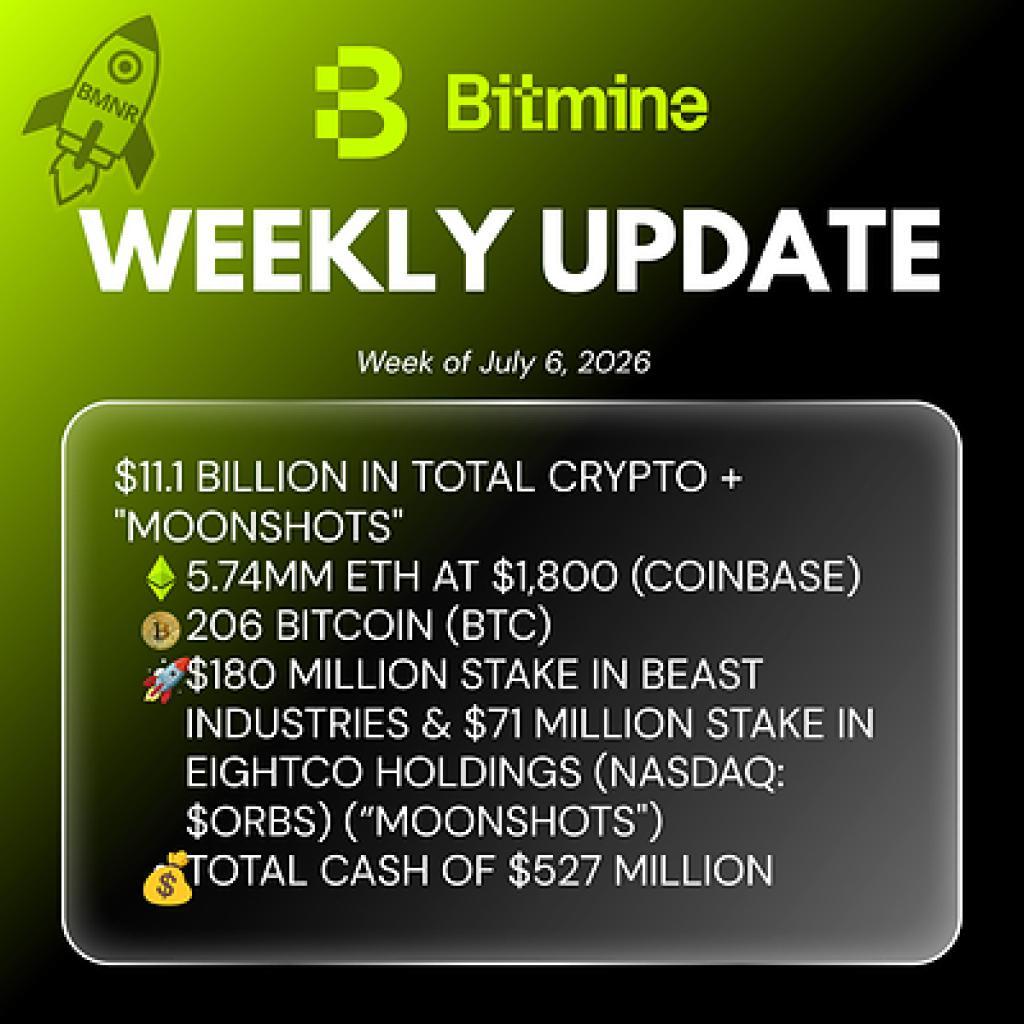
Bitmine Immersion Technologies (BMNR) Announces Total Crypto and Cash Holdings Top $11.1 Billion Now