Blockchain analytics platform Santiment has flagged Solana market FUD at its highest level of 2026, coinciding with trading volume dropping to a yearly low, a combination that has historically preceded notable shifts in market direction.
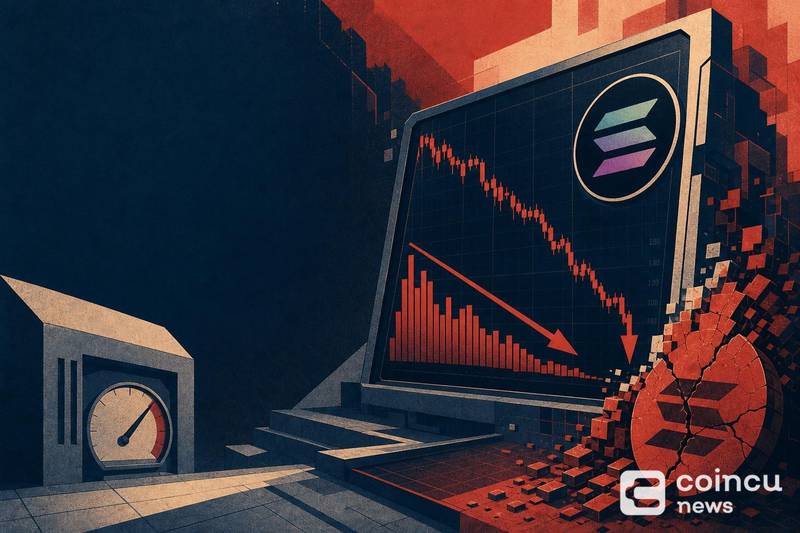
The sentiment reading, shared by Santiment’s data team, indicates that negative crowd sentiment around SOL has reached an extreme not seen at any prior point this year. FUD, an acronym for “fear, uncertainty, and doubt,” measures the degree to which market participants express pessimism or anxiety about an asset’s near-term prospects. For related coverage, see On-Chain Tokenized Stock Trading Volume Hits Record $3.86B in June.
The reading is sentiment-based rather than tied to any specific protocol failure or security incident on Solana’s network. It reflects how traders and commentators are discussing SOL across social platforms tracked by Santiment’s analytics tools.
Trading Volume at a 2026 Low Reinforces Cautious Positioning
Alongside the peak FUD reading, Solana’s trading volume has fallen to its lowest level of 2026. Volume measures the total value of SOL changing hands across exchanges over a given period, and a yearly low suggests reduced participation from both retail and institutional traders.
Low volume environments tend to amplify price uncertainty. When fewer participants are actively trading, individual large orders can move the market more easily, and the absence of strong buying or selling conviction leaves direction unclear.
The volume decline also signals that many traders may be choosing to sit on the sidelines rather than take directional bets. This kind of hesitation often accompanies periods where market narratives are shifting or where participants are waiting for a catalyst before re-engaging.
Santiment has previously tracked similar sentiment and volume dynamics across major crypto assets. The firm’s analysis of Bitcoin and Ethereum exchange supply patterns has shown how on-chain and sentiment data can provide early signals about market positioning shifts.
What Could Be Behind Solana’s Current Wave of Market Fear
The drivers behind elevated FUD are not always traceable to a single event. In Solana’s case, the sentiment deterioration appears to reflect broader caution rather than a response to any specific negative development on the network.
Weakening momentum is one plausible contributor. When an asset’s trading activity declines alongside rising negative sentiment, it can create a feedback loop where cautious positioning reinforces the bearish narrative, which in turn discourages new buying.
Liquidity Concerns and Narrative Fatigue
Reduced liquidity, as reflected in the volume drop, can make traders more hesitant to enter positions. Thinner order books mean greater slippage risk, which particularly affects larger traders and institutional participants.
Narrative fatigue may also play a role. Solana’s ecosystem has seen significant growth in areas like real-world asset tokenization, where its total value recently reached $3.62 billion, and in tokenized stock interest. However, positive fundamental developments do not always translate immediately into sustained bullish sentiment, especially when broader market conditions are uncertain.
It is important to separate observed sentiment from confirmed causes. The Santiment data captures what market participants are feeling, not necessarily why they feel it.
How Traders May Interpret a High-FUD, Low-Volume Setup
The combination of extreme negative sentiment and low volume creates an ambiguous setup that traders can read in opposing ways.
From a bearish perspective, low volume paired with high FUD could indicate that demand is genuinely weak and that sellers have not yet finished exiting positions. In this reading, the lack of buying interest suggests the market could drift lower before finding support.
The contrarian interpretation is more optimistic. Historically across crypto markets, periods of extreme negative sentiment have sometimes preceded reversals. When nearly all participants who want to sell have already done so, even modest buying pressure can trigger a recovery.
Neither interpretation is guaranteed to play out. Sentiment extremes are a necessary but not sufficient condition for reversals, and low volume can persist for extended periods before a directional move materializes.
Traders monitoring this setup would typically watch for signs of volume recovery, stabilization in sentiment readings, and whether any follow-through emerges in either direction. A volume spike accompanying a sentiment shift would carry more weight than a gradual drift.
The broader context of exchange flow dynamics tracked by Santiment across other major assets can also provide context for whether Solana’s sentiment weakness is isolated or part of a wider market trend.
FAQ: Solana FUD, Santiment Data, and What to Watch Next
What does Solana market FUD mean?
FUD stands for fear, uncertainty, and doubt. In this context, Santiment measures the degree of negative sentiment expressed by market participants across social platforms. A 2026 high means traders are more pessimistic about SOL than at any prior point this year.
Why does low trading volume matter for Solana?
Trading volume reflects how actively participants are buying and selling SOL. A yearly low suggests reduced conviction and participation, which can lead to thinner liquidity, greater price volatility on individual trades, and uncertainty about market direction.
Does extreme FUD guarantee a price reversal?
No. While extreme negative sentiment has historically preceded some reversals in crypto markets, it is not a reliable standalone signal. The outcome depends on whether new demand emerges, whether volume recovers, and whether broader market conditions support a shift in direction.
What signals should traders monitor next?
Key indicators include a recovery in trading volume, a normalization of sentiment readings from Santiment, on-chain activity changes on the Solana network, and whether any catalyst emerges that could shift the current narrative around SOL.
Disclaimer: This article is for informational purposes only and does not constitute financial or investment advice. Cryptocurrency and digital asset markets carry significant risk. Always do your own research before making decisions.
No tags available.


Other Posts








- China, US Conclude Trade Talks with Focus on Cooperation
- Crypto Weekly: NYSE Backs OKX, Kraken Gets Fed Access, BTC Sells
- Court Upholds Fed’s Rejection of Custodia Bank’s Request
- DeriW Launches Edge Hour Trading Competition Platform for Derivatives Traders
- Former CFO Convicted for $35M Fraudulent Crypto Investment
- Michael Saylor Denies Bitcoin Sell-Off Amid Large BTC Transfer
- Buy Dogecoin on eToro: Step-by-Step Guide for Beginners (2024)
- Kazakhstan Explores Crypto Reserves Backed by National Funds
- JPMorgan Increases Holdings in BlackRock’s Bitcoin ETF
- Nordea Bank Introduces Bitcoin ETP Trading for Nordic Customers
- XRP Spot ETF Launches on Nasdaq Amid Market Fluctuations
- Peter Schiff Challenges Michael Saylor on MSTR’s Business Model
- Thailand Orders Worldcoin to Delete 1.2 Million Biometric Records
- UK Proposes New DeFi Tax Framework to Ease User Burden
- WLFI Under Fire: Analyst Warns Hyperliquid Could Be Next
- Ancient Ethereum Whale Moves $1.19 Billion After Decade
- BlackRock Receives Large Crypto Transfers from Coinbase
- SEC Scrutiny on ALT5 Sigma’s Leadership Disclosure Timing
- Yala Injects $5.5 Million Amid Recovery Efforts
- Radiant Capital Faces $50M Loss in Major Security Breach
- China, US Conclude Trade Talks with Focus on Cooperation
- Crypto Weekly: NYSE Backs OKX, Kraken Gets Fed Access, BTC Sells
- Court Upholds Fed’s Rejection of Custodia Bank’s Request
- DeriW Launches Edge Hour Trading Competition Platform for Derivatives Traders
- Former CFO Convicted for $35M Fraudulent Crypto Investment
- Michael Saylor Denies Bitcoin Sell-Off Amid Large BTC Transfer
- Buy Dogecoin on eToro: Step-by-Step Guide for Beginners (2024)
- Kazakhstan Explores Crypto Reserves Backed by National Funds
- JPMorgan Increases Holdings in BlackRock’s Bitcoin ETF
- Nordea Bank Introduces Bitcoin ETP Trading for Nordic Customers
- XRP Spot ETF Launches on Nasdaq Amid Market Fluctuations
- Peter Schiff Challenges Michael Saylor on MSTR’s Business Model
- Thailand Orders Worldcoin to Delete 1.2 Million Biometric Records
- UK Proposes New DeFi Tax Framework to Ease User Burden
- WLFI Under Fire: Analyst Warns Hyperliquid Could Be Next
- Ancient Ethereum Whale Moves $1.19 Billion After Decade
- BlackRock Receives Large Crypto Transfers from Coinbase
- SEC Scrutiny on ALT5 Sigma’s Leadership Disclosure Timing
- Yala Injects $5.5 Million Amid Recovery Efforts
- Radiant Capital Faces $50M Loss in Major Security Breach
- China, US Conclude Trade Talks with Focus on Cooperation
- Crypto Weekly: NYSE Backs OKX, Kraken Gets Fed Access, BTC Sells
- Court Upholds Fed’s Rejection of Custodia Bank’s Request
- DeriW Launches Edge Hour Trading Competition Platform for Derivatives Traders
- Former CFO Convicted for $35M Fraudulent Crypto Investment
- Michael Saylor Denies Bitcoin Sell-Off Amid Large BTC Transfer
- Buy Dogecoin on eToro: Step-by-Step Guide for Beginners (2024)
- Kazakhstan Explores Crypto Reserves Backed by National Funds
- JPMorgan Increases Holdings in BlackRock’s Bitcoin ETF
- Nordea Bank Introduces Bitcoin ETP Trading for Nordic Customers
- XRP Spot ETF Launches on Nasdaq Amid Market Fluctuations
- Peter Schiff Challenges Michael Saylor on MSTR’s Business Model
- Thailand Orders Worldcoin to Delete 1.2 Million Biometric Records
- UK Proposes New DeFi Tax Framework to Ease User Burden
- WLFI Under Fire: Analyst Warns Hyperliquid Could Be Next
- Ancient Ethereum Whale Moves $1.19 Billion After Decade
- BlackRock Receives Large Crypto Transfers from Coinbase
- SEC Scrutiny on ALT5 Sigma’s Leadership Disclosure Timing
- Yala Injects $5.5 Million Amid Recovery Efforts
- Radiant Capital Faces $50M Loss in Major Security Breach

Hyperliquid and Phantom Urge CFTC to Update DeFi Regulatory Rules

BitGo to Launch Quantum-Resistant Security Tools for Bitcoin Wallets

Bitcoin Suisse Advances Middle East Expansion, Receives Financial Services Permission in Abu Dhabi