Martha Stewart Net Worth: From Homemaker to Business Mogul (A Case Study)
Martha Stewart’s net worth in 2026 is widely estimated at around $400 million. Best known for turning homemaking, entertaining, and lifestyle advice into a large commercial brand, Stewart built her fortune through publishing, television, licensing, retail partnerships, and long-term control over one of the most recognizable names in American lifestyle media.
This article looks at her background, the business milestones that shaped her wealth, the setback that interrupted her rise, and the brand activity that still supports public estimates of her fortune today.

Who is Martha Stewart?
| Full name | Martha Helen Stewart |
| Net Worth | Around $400 million |
| Birthdate | Aug 3, 1941 |
| Birthplace | Jersey City |
| Profession | Businesswoman, author, television personality, lifestyle entrepreneur |
| Nationality | United States of America |
| Education | Barnard College |
Martha Stewart is an American businesswoman, author, television personality, and lifestyle entrepreneur. Over several decades, she transformed practical domestic expertise into a broad commercial platform spanning cooking, gardening, home design, entertaining, publishing, television, and consumer products.

Unlike many media personalities, Stewart expanded beyond publishing and television. She successfully transformed editorial authority into product licensing, merchandising, retail partnerships, and enterprise value. That ability to commercialize trust became the foundation of her long-term fortune.
Read more: Balaji Srinivasan Net Worth: Analyzing the Crypto Pioneer’s Wealth
Early Life and Education
Martha Stewart was born Martha Kostyra on August 3, 1941, in Jersey City, New Jersey, and grew up in a Polish-American household where cooking, gardening, and homemaking played a central role in daily life. Many of the skills that later shaped her public image were rooted in that early environment.

She studied history and architectural history at Barnard College. Before becoming a full-time entrepreneur, Stewart also worked as a model and later as a stockbroker. That mix of aesthetic sensibility and financial familiarity would eventually prove useful when she began turning personal expertise into a scalable business brand.
How Martha Stewart Built Her Career
Stewart’s rise did not happen overnight. She first established herself through a catering business that became known for elegant presentation and organization. Her catering success eventually opened the door to publishing opportunities, allowing her to reach a national audience.
Her early books helped establish authority in entertaining and household expertise, while Martha Stewart Living expanded her influence into mainstream lifestyle media.
Over time, the business evolved into a broader commercial ecosystem:
- Television increased brand visibility
- Magazines and books deepened consumer trust
- Branded merchandise expanded retail reach
- Licensing partnerships generated recurring revenue
By the late 1990s, Stewart had evolved from a television personality into a fully scaled lifestyle entrepreneur.
The Cookbook That Changed Everything
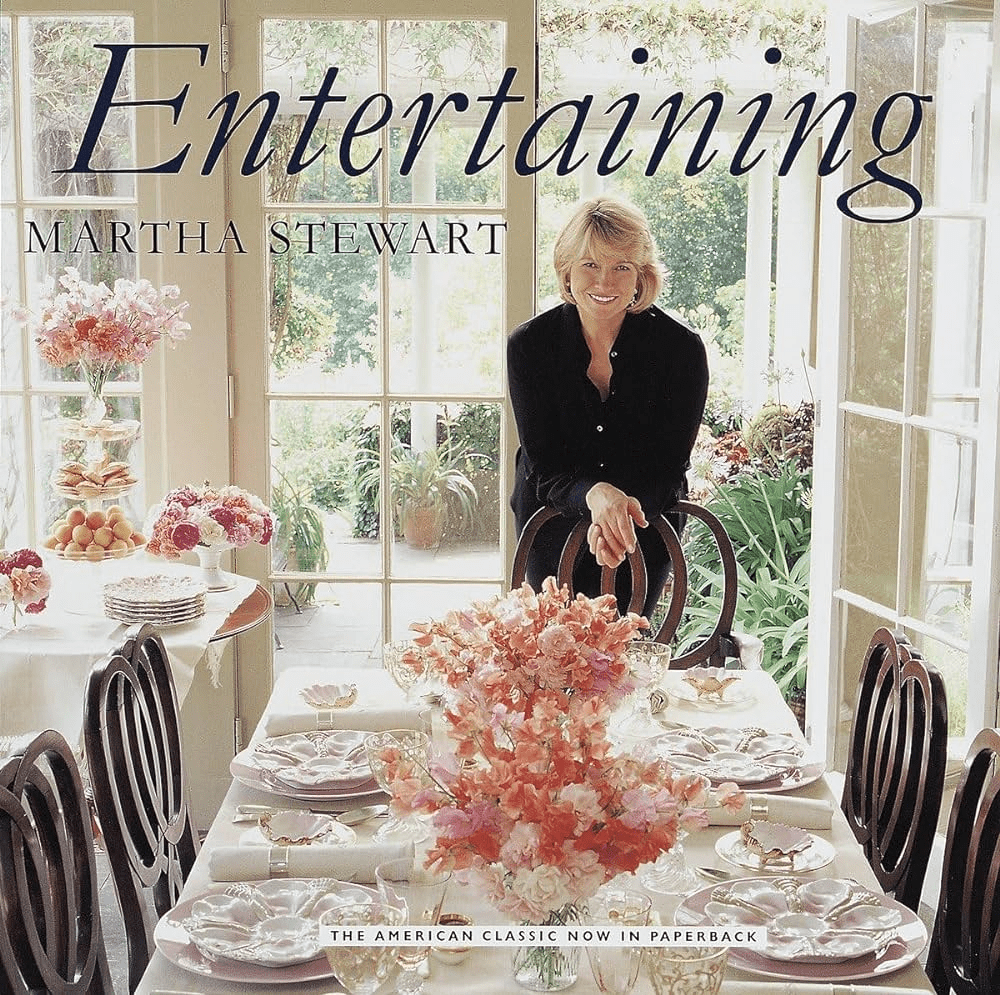
One of Stewart’s earliest major business breakthroughs came with the publication of Entertaining in 1982. The book elevated her from caterer to nationally recognized lifestyle authority. More importantly, it proved that her aesthetic and homemaking expertise could scale beyond one-on-one client services. Instead of serving individual events, Stewart was building a mass-market audience around a recognizable lifestyle identity.
Expansion Through Books and Television
Following the success of Entertaining, Stewart released additional books through Clarkson Potter and expanded into newspapers, magazines, and television appearances.
This stage of growth was critical because it built audience trust strong enough to support future merchandising and licensing opportunities.

Consumers were no longer just reading recipes or decorating advice. They were buying into the Martha Stewart lifestyle brand itself.
Television played a particularly important role in strengthening that relationship, turning Stewart into one of the most recognizable figures in American lifestyle media.
Martha Stewart’s Billionaire Era
In 1997, Stewart and business partner Sharon Patrick consolidated television, publishing, and merchandising operations into Martha Stewart Living Omnimedia.

The company’s IPO in 1999 became the biggest financial milestone of Stewart’s career. When Martha Stewart Living Omnimedia began trading on the New York Stock Exchange under ticker MSO, the stock surged dramatically. At the peak of that valuation, Stewart briefly became a billionaire on paper.
However, that status did not remain permanent. As the company’s market value later declined, Stewart’s billionaire ranking disappeared as well. Still, the IPO demonstrated the enormous enterprise value attached to the Martha Stewart brand during its peak years.
Read more: Jack Mallers Net Worth: Strike Founder With an Optimistic Vision For Bitcoin (A case study)
Key Drivers Behind Martha Stewart’s Wealth
Martha Stewart built her wealth through a combination of media ownership, publishing success, brand licensing, retail partnerships, and the long-term commercial value of her name.
Her early books and editorial products helped establish trust with audiences, but the real scale came when her content evolved into a broader brand system. Magazines, syndicated television, household products, endorsements, and merchandising all allowed Stewart to monetize the same lifestyle authority across multiple channels.
One of the most important turning points came with Martha Stewart Living Omnimedia. By consolidating various media and merchandising ventures into a larger corporate structure, Stewart created a business vehicle that could generate substantial enterprise value rather than relying only on personal appearances or publishing income.
| Period | Key Wealth Driver | Why It Mattered |
|---|---|---|
| 1970s-1980s | Catering and household expertise | Helped Stewart turn personal domestic skills into a recognizable premium service identity. |
| 1980s-1990s | Books, publishing, and media expansion | Expanded her reach from niche audiences to mass-market lifestyle consumers. |
| Late 1990s | Martha Stewart Living Omnimedia | Consolidated her brand into a larger business platform with substantial commercial value. |
| 1999 onward | IPO, licensing, and merchandising | Created a wealth inflection point by linking the brand to equity value and large-scale product revenue. |
Legal Troubles and Financial Setback
Stewart’s wealth story also includes a major disruption. In the early 2000s, legal trouble related to insider trading allegations led to criminal charges, significant reputational damage, and a period in prison. The case became one of the defining public setbacks of her career.
From a net worth perspective, this matters because the controversy affected both investor confidence and the perceived value of her business empire. Leadership changes, brand pressure, and market reaction all played a role in limiting the durability of the billionaire status she once briefly reached.
Her legal troubles did not erase the power of the Martha Stewart brand, but they clearly altered the trajectory of her public business story and financial standing.
Brand Recovery and Business Revival
After prison, Stewart rebuilt relevance through persistence, media visibility, and brand flexibility. Rather than disappearing from public life, she returned to television, publishing, and commercial partnerships, gradually restoring the brand’s visibility and marketability.
An important part of that revival was her willingness to adapt. Over time, Stewart’s image expanded beyond traditional homemaking into a broader pop-cultural role, including collaborations and appearances that introduced her to younger audiences. This helped keep the brand commercially viable even as the original media landscape changed.
Her financial recovery was not simply about returning to her old form. It was about proving that the Martha Stewart name still carried licensing power, media value, and consumer trust long after the most damaging chapter of her legal troubles.
Real estate held by Martha Stewart
Martha Stewart owns an estimated $100 million (£80 million) worth of properties, including residences in New York and Maine. Among her notable properties is the famed Turkey Hill farmhouse estate in Connecticut, which she lovingly restored and expanded over the years before selling it in 2007 for $6.7 million. Reflecting on her time there, Stewart remarked on the profound influence the estate had on her and her family.
In Maine, Stewart acquired the picturesque Skylands estate in Seal Harbor for around $5.4 million in 1997. This property, originally built for Edsel Ford, boasts luxurious features such as antique furnishings and a pink granite driveway. Additionally, Stewart once owned a Manhattan penthouse overlooking the Hudson River, which she listed in 2010 for $15.9 million.

Her primary residence, however, is nestled in Katonah, New York, where her sprawling 152-acre estate includes multiple buildings and a horse farm. Stewart also maintains homes in East Hampton and on Lily Pond Lane.
Latest Business and Brand Activity
Martha Stewart remains commercially active, and that continued relevance supports why her net worth topic still draws attention. Several brand developments from 2025 and 2026 show that the Martha Stewart name is still being extended into new product categories and partnerships:
- In March 2025, QVC and Marquee Brands announced an expanded Martha Stewart assortment across apparel, culinary, gardening, and home decor.
- In April 2025, Ubique Group launched Martha Stewart patio furniture collections focused on outdoor entertaining.
- In July 2025, Kohler named Stewart its cast iron ambassador, linking her brand to kitchen and bath design.
- In November 2025, Stewart partnered with Crumbl on a limited-time dessert collection tied to the re-release of her 1982 book Entertaining.
- In May 2026, a new Martha Stewart Grocery line of pizza and pantry products was announced for Canada, with a later U.S. launch expected.
Martha Stewart’s achievements
Martha Stewart’s achievements help explain why her brand remained commercially powerful for so long. Over the years, she built Martha Stewart Living into one of the most recognizable lifestyle media brands in the United States and expanded her influence across publishing, television, merchandising, and licensing.
Her career also brought major public recognition. She received the Golden Plate Award from the American Academy of Achievement in 1995, earned the Edison Achievement Award in 1997, and was later inducted into both the New Jersey Hall of Fame and the International Licensing Hall of Fame. In 2023, she drew worldwide attention again by appearing on the cover of the Sports Illustrated Swimsuit Issue at age 81.

Even so, the bigger achievement is not any single award. It is the durability of the business empire built around her name. Even after major legal and business setbacks, Stewart remained culturally relevant through new partnerships, product launches, and media appearances. That ability to stay visible and commercially valuable across different eras is one of the main reasons her net worth has remained significant.
Conclusion
Martha Stewart built her fortune by transforming lifestyle expertise into a commercial empire that reached far beyond television or publishing alone. Her wealth story is rooted in media, merchandising, licensing, and an unusually durable personal brand.
Even after legal setbacks and changing business cycles, Stewart’s financial legacy remains closely tied to her ability to turn domestic authority into long-term enterprise value.
FAQs about Martha Stewart net worth
What is Martha Stewart’s current net worth?
Martha Stewart’s net worth in 2026 is widely estimated at around $400 million.
Was Martha Stewart ever a billionaire?
Yes. She briefly reached billionaire status after Martha Stewart Living Omnimedia went public in 1999.
How did Martha Stewart build her wealth?
She built her wealth through publishing, television, merchandising, licensing, and the expansion of the Martha Stewart brand into a large commercial platform.
Did prison affect Martha Stewart’s wealth?
Yes. Her legal troubles damaged both her public image and the business momentum of her brand, contributing to a decline from her earlier peak valuation.
Is Martha Stewart still active in business?
Yes. She remains active through media appearances, partnerships, branding, and lifestyle-related commercial projects.
Methodology
The 2026 net worth figure is framed as a widely cited estimate based on historical reporting about Martha Stewart Living Omnimedia, mainstream net worth references, and recent brand activity that helps explain why her name still carries commercial value.
| DISCLAIMER: The information on this website is provided as general market commentary and does not constitute investment advice. We encourage you to do your own research before investing. |


- China, US Conclude Trade Talks with Focus on Cooperation
- Crypto Weekly: NYSE Backs OKX, Kraken Gets Fed Access, BTC Sells
- Court Upholds Fed’s Rejection of Custodia Bank’s Request
- Former CFO Convicted for $35M Fraudulent Crypto Investment
- DeriW Launches Edge Hour Trading Competition Platform for Derivatives Traders
- Michael Saylor Denies Bitcoin Sell-Off Amid Large BTC Transfer
- Buy Dogecoin on eToro: Step-by-Step Guide for Beginners (2024)
- Kazakhstan Explores Crypto Reserves Backed by National Funds
- JPMorgan Increases Holdings in BlackRock’s Bitcoin ETF
- Nordea Bank Introduces Bitcoin ETP Trading for Nordic Customers
- XRP Spot ETF Launches on Nasdaq Amid Market Fluctuations
- Peter Schiff Challenges Michael Saylor on MSTR’s Business Model
- Thailand Orders Worldcoin to Delete 1.2 Million Biometric Records
- UK Proposes New DeFi Tax Framework to Ease User Burden
- WLFI Under Fire: Analyst Warns Hyperliquid Could Be Next
- Ancient Ethereum Whale Moves $1.19 Billion After Decade
- BlackRock Receives Large Crypto Transfers from Coinbase
- SEC Scrutiny on ALT5 Sigma’s Leadership Disclosure Timing
- Yala Injects $5.5 Million Amid Recovery Efforts
- Radiant Capital Faces $50M Loss in Major Security Breach
- China, US Conclude Trade Talks with Focus on Cooperation
- Crypto Weekly: NYSE Backs OKX, Kraken Gets Fed Access, BTC Sells
- Court Upholds Fed’s Rejection of Custodia Bank’s Request
- Former CFO Convicted for $35M Fraudulent Crypto Investment
- DeriW Launches Edge Hour Trading Competition Platform for Derivatives Traders
- Michael Saylor Denies Bitcoin Sell-Off Amid Large BTC Transfer
- Buy Dogecoin on eToro: Step-by-Step Guide for Beginners (2024)
- Kazakhstan Explores Crypto Reserves Backed by National Funds
- JPMorgan Increases Holdings in BlackRock’s Bitcoin ETF
- Nordea Bank Introduces Bitcoin ETP Trading for Nordic Customers
- XRP Spot ETF Launches on Nasdaq Amid Market Fluctuations
- Peter Schiff Challenges Michael Saylor on MSTR’s Business Model
- Thailand Orders Worldcoin to Delete 1.2 Million Biometric Records
- UK Proposes New DeFi Tax Framework to Ease User Burden
- WLFI Under Fire: Analyst Warns Hyperliquid Could Be Next
- Ancient Ethereum Whale Moves $1.19 Billion After Decade
- BlackRock Receives Large Crypto Transfers from Coinbase
- SEC Scrutiny on ALT5 Sigma’s Leadership Disclosure Timing
- Yala Injects $5.5 Million Amid Recovery Efforts
- Radiant Capital Faces $50M Loss in Major Security Breach
- China, US Conclude Trade Talks with Focus on Cooperation
- Crypto Weekly: NYSE Backs OKX, Kraken Gets Fed Access, BTC Sells
- Court Upholds Fed’s Rejection of Custodia Bank’s Request
- Former CFO Convicted for $35M Fraudulent Crypto Investment
- DeriW Launches Edge Hour Trading Competition Platform for Derivatives Traders
- Michael Saylor Denies Bitcoin Sell-Off Amid Large BTC Transfer
- Buy Dogecoin on eToro: Step-by-Step Guide for Beginners (2024)
- Kazakhstan Explores Crypto Reserves Backed by National Funds
- JPMorgan Increases Holdings in BlackRock’s Bitcoin ETF
- Nordea Bank Introduces Bitcoin ETP Trading for Nordic Customers
- XRP Spot ETF Launches on Nasdaq Amid Market Fluctuations
- Peter Schiff Challenges Michael Saylor on MSTR’s Business Model
- Thailand Orders Worldcoin to Delete 1.2 Million Biometric Records
- UK Proposes New DeFi Tax Framework to Ease User Burden
- WLFI Under Fire: Analyst Warns Hyperliquid Could Be Next
- Ancient Ethereum Whale Moves $1.19 Billion After Decade
- BlackRock Receives Large Crypto Transfers from Coinbase
- SEC Scrutiny on ALT5 Sigma’s Leadership Disclosure Timing
- Yala Injects $5.5 Million Amid Recovery Efforts
- Radiant Capital Faces $50M Loss in Major Security Breach


Russia Signs Law Legalizing Crypto Trading While Crypto Payments Stay Banned


Zoomex Enhances Its Strategy Center With Advanced Strategy Trading Tools