Tether-Backed Adecoagro Plans Bagasse-Powered Bitcoin Mining in Brazil
Adecoagro, the agricultural company in which Tether holds a majority stake, has announced plans to develop a Bitcoin mining operation in Brazil powered by bagasse, the fibrous byproduct of sugarcane processing.

The initiative pairs Adecoagro’s existing sugar-and-ethanol infrastructure with Tether’s push into real-world asset sectors beyond stablecoins. According to an investor relations announcement from Adecoagro, the two companies intend to use renewable energy generated at Adecoagro’s Brazilian facilities to power Bitcoin mining hardware.
Why bagasse as a mining energy source
Bagasse is the dry, pulpy residue left after sugarcane stalks are crushed to extract juice. Sugar-and-ethanol producers routinely burn it in cogeneration plants to produce electricity and steam, making it a renewable biomass fuel that is already integrated into Adecoagro’s operations.
For Bitcoin mining, which requires continuous, low-cost electricity, tapping into an existing bagasse cogeneration setup could reduce energy procurement costs. The approach would repurpose surplus electricity that Adecoagro’s sugar, ethanol, and energy division already produces as part of its normal agricultural cycle.
This is a planned operation, not a confirmed live deployment. Specific details on mining capacity, hashrate targets, or timeline have not yet been disclosed publicly.
Tether’s strategic interest in the project
Tether acquired a controlling stake in Adecoagro as part of a broader strategy to expand into sustainable infrastructure and real-economy assets. The stablecoin issuer’s backing elevates what might otherwise be a niche agribusiness energy project into a notable Bitcoin-sector development.
Tether has signaled interest in Bitcoin mining and energy investments as complements to its core stablecoin business. The Adecoagro partnership represents a concrete step in that direction, connecting agricultural renewable energy with proof-of-work mining.
The move also intersects with broader trends in stablecoin issuers expanding beyond their core products into adjacent infrastructure plays, as traditional finance and digital asset firms increasingly explore integration between traditional and digital asset sectors.
Why Brazil is central to the plan
Brazil is one of the world’s largest sugarcane producers, which means bagasse is available at industrial scale. Adecoagro already operates sugar-and-ethanol mills in the country with cogeneration capacity, providing a ready-made energy source for mining rigs.
The country’s tropical climate supports year-round sugarcane harvesting in key regions, potentially offering more consistent bagasse supply than seasonal crop cycles in other geographies. This positions Brazil as a logical location for biomass-powered mining infrastructure.
The announcement, also distributed via Nasdaq’s press release service, frames the project as renewable-energy Bitcoin mining, a category that has drawn increasing attention as the industry faces scrutiny over its environmental footprint.
Whether this initiative meaningfully shifts Bitcoin’s demand dynamics will depend on the scale Adecoagro ultimately deploys, details that remain unspecified at this stage.
FAQ about Adecoagro’s bagasse-powered Bitcoin mining plan
Is the mining operation already active?
No. The project has been announced as a plan. No operational launch date or live hashrate figures have been disclosed.
What is bagasse?
Bagasse is the fibrous material left over after sugarcane is crushed. It is commonly burned to generate electricity and heat in cogeneration plants at sugar mills.
Why is the operation planned for Brazil?
Brazil is a major sugarcane producer, and Adecoagro already operates sugar-and-ethanol facilities there with existing cogeneration infrastructure that could supply electricity for mining.
What does “Tether-backed” mean in this context?
Tether, the company behind the USDT stablecoin, has acquired a controlling stake in Adecoagro, making it the majority owner and strategic backer of the agricultural firm’s operations, including this planned mining initiative.
How much Bitcoin mining capacity is planned?
This has not yet been specified. The announcements describe the intent and energy source but do not include hashrate, wattage, or production targets.
Disclaimer: This article is for informational purposes only and does not constitute financial or investment advice. Cryptocurrency and digital asset markets carry significant risk. Always do your own research before making decisions.
No tags available.


Other Posts








- China, US Conclude Trade Talks with Focus on Cooperation
- Crypto Weekly: NYSE Backs OKX, Kraken Gets Fed Access, BTC Sells
- Court Upholds Fed’s Rejection of Custodia Bank’s Request
- Former CFO Convicted for $35M Fraudulent Crypto Investment
- DeriW Launches Edge Hour Trading Competition Platform for Derivatives Traders
- Michael Saylor Denies Bitcoin Sell-Off Amid Large BTC Transfer
- Buy Dogecoin on eToro: Step-by-Step Guide for Beginners (2024)
- Kazakhstan Explores Crypto Reserves Backed by National Funds
- JPMorgan Increases Holdings in BlackRock’s Bitcoin ETF
- Nordea Bank Introduces Bitcoin ETP Trading for Nordic Customers
- XRP Spot ETF Launches on Nasdaq Amid Market Fluctuations
- Peter Schiff Challenges Michael Saylor on MSTR’s Business Model
- Thailand Orders Worldcoin to Delete 1.2 Million Biometric Records
- UK Proposes New DeFi Tax Framework to Ease User Burden
- WLFI Under Fire: Analyst Warns Hyperliquid Could Be Next
- Ancient Ethereum Whale Moves $1.19 Billion After Decade
- BlackRock Receives Large Crypto Transfers from Coinbase
- SEC Scrutiny on ALT5 Sigma’s Leadership Disclosure Timing
- Yala Injects $5.5 Million Amid Recovery Efforts
- Radiant Capital Faces $50M Loss in Major Security Breach
- China, US Conclude Trade Talks with Focus on Cooperation
- Crypto Weekly: NYSE Backs OKX, Kraken Gets Fed Access, BTC Sells
- Court Upholds Fed’s Rejection of Custodia Bank’s Request
- Former CFO Convicted for $35M Fraudulent Crypto Investment
- DeriW Launches Edge Hour Trading Competition Platform for Derivatives Traders
- Michael Saylor Denies Bitcoin Sell-Off Amid Large BTC Transfer
- Buy Dogecoin on eToro: Step-by-Step Guide for Beginners (2024)
- Kazakhstan Explores Crypto Reserves Backed by National Funds
- JPMorgan Increases Holdings in BlackRock’s Bitcoin ETF
- Nordea Bank Introduces Bitcoin ETP Trading for Nordic Customers
- XRP Spot ETF Launches on Nasdaq Amid Market Fluctuations
- Peter Schiff Challenges Michael Saylor on MSTR’s Business Model
- Thailand Orders Worldcoin to Delete 1.2 Million Biometric Records
- UK Proposes New DeFi Tax Framework to Ease User Burden
- WLFI Under Fire: Analyst Warns Hyperliquid Could Be Next
- Ancient Ethereum Whale Moves $1.19 Billion After Decade
- BlackRock Receives Large Crypto Transfers from Coinbase
- SEC Scrutiny on ALT5 Sigma’s Leadership Disclosure Timing
- Yala Injects $5.5 Million Amid Recovery Efforts
- Radiant Capital Faces $50M Loss in Major Security Breach
- China, US Conclude Trade Talks with Focus on Cooperation
- Crypto Weekly: NYSE Backs OKX, Kraken Gets Fed Access, BTC Sells
- Court Upholds Fed’s Rejection of Custodia Bank’s Request
- Former CFO Convicted for $35M Fraudulent Crypto Investment
- DeriW Launches Edge Hour Trading Competition Platform for Derivatives Traders
- Michael Saylor Denies Bitcoin Sell-Off Amid Large BTC Transfer
- Buy Dogecoin on eToro: Step-by-Step Guide for Beginners (2024)
- Kazakhstan Explores Crypto Reserves Backed by National Funds
- JPMorgan Increases Holdings in BlackRock’s Bitcoin ETF
- Nordea Bank Introduces Bitcoin ETP Trading for Nordic Customers
- XRP Spot ETF Launches on Nasdaq Amid Market Fluctuations
- Peter Schiff Challenges Michael Saylor on MSTR’s Business Model
- Thailand Orders Worldcoin to Delete 1.2 Million Biometric Records
- UK Proposes New DeFi Tax Framework to Ease User Burden
- WLFI Under Fire: Analyst Warns Hyperliquid Could Be Next
- Ancient Ethereum Whale Moves $1.19 Billion After Decade
- BlackRock Receives Large Crypto Transfers from Coinbase
- SEC Scrutiny on ALT5 Sigma’s Leadership Disclosure Timing
- Yala Injects $5.5 Million Amid Recovery Efforts
- Radiant Capital Faces $50M Loss in Major Security Breach

Binance Wallet Adds Limit Orders on Ethereum and Base for Web and App Users


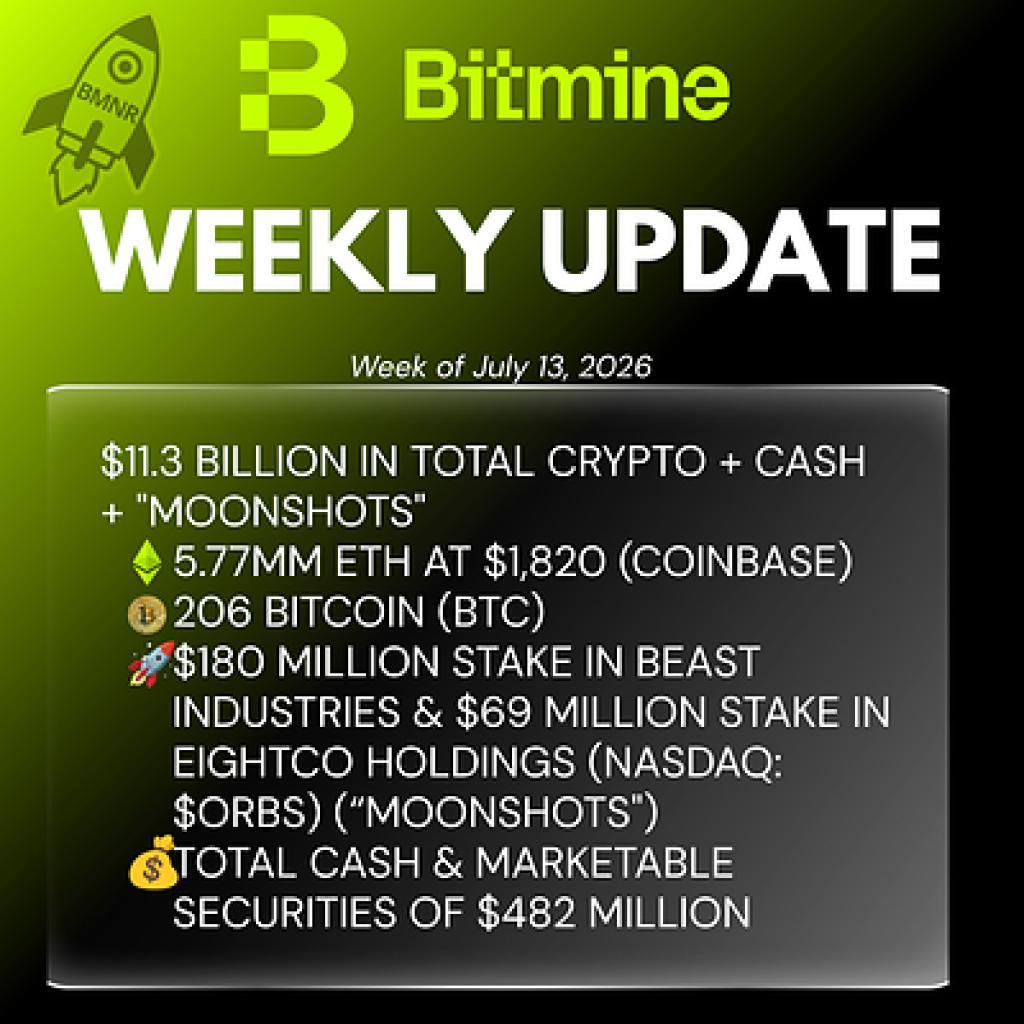
Bitmine Immersion Technologies (BMNR) Announces ETH Holdings Reach 5.77 Million Tokens, and Total Crypto and Total Cash Holdings of $11.3 Billion

Aurra Markets Strengthens MENA Presence Following Money Expo Abu Dhabi 2026