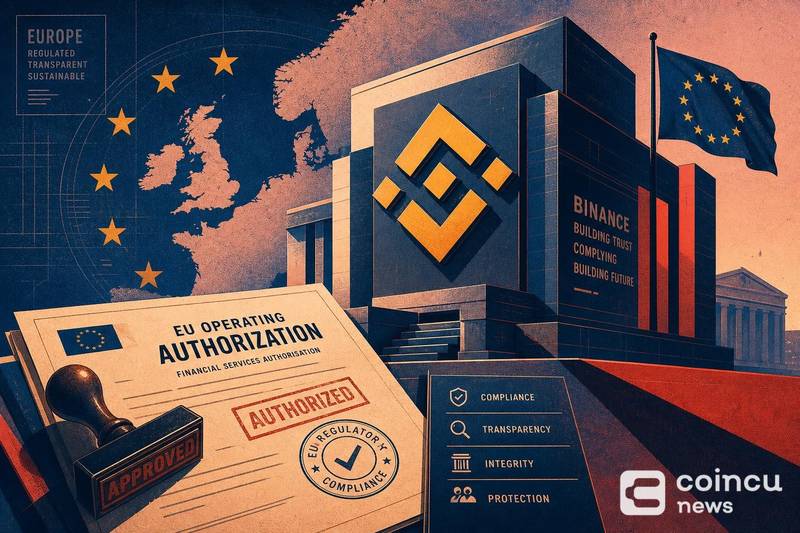
Binance to Remain in Europe, Seek New EU Operating Authorizations
Binance has stated it will remain in Europe and pursue other EU operating authorizations, signaling a regulatory pivot as the exchange navigates the bloc’s evolving crypto compliance landscape.
The announcement comes amid reports that Binance faces challenges with its current EU licensing pathway. Yahoo Finance reported on the risk of the exchange losing its EU footing, raising questions about how the company would maintain access to European users. For related coverage, see Binance Alpha Lists xMoney (XMN) With Token Swap Airdrop.
In response, Binance published a statement on its official blog affirming its commitment to the region. The company said it remains fully committed to securing its regulatory position in Europe, framing the move as continuity rather than retreat. For related coverage, see Binance Adds AMDB, EWYB, INTCB and MSTRB bStocks Trading Pairs.
Binance’s Position: Staying, Not Leaving
The core message from Binance is unambiguous: the exchange intends to stay in Europe. Rather than withdrawing from the market, Binance is adjusting its regulatory approach by seeking alternative operating authorizations within the EU framework.
This distinction matters. A full exit would have forced European users onto other platforms. By pursuing other authorization pathways, Binance is attempting to preserve its regional operations while adapting to regulatory requirements.
What “Other EU Operating Authorizations” Means
The EU’s regulatory environment for crypto exchanges involves both national-level licenses and bloc-wide frameworks. When Binance says it will seek “other” authorizations, it implies a shift in which specific regulatory pathway or jurisdiction the company is targeting for its European operations.
This is not unusual for large crypto firms operating across multiple EU member states. Exchanges often hold licenses in one country that allow them to passport services across the bloc, and a change in licensing strategy can involve switching the home jurisdiction or pursuing a different type of authorization.
The Markets in Crypto-Assets Regulation (MiCA), overseen by ESMA, has established a unified framework for crypto asset service providers across the EU. Any authorization Binance pursues would need to align with MiCA’s requirements.
Why This Matters for Binance’s European Users
For retail users, the immediate takeaway is that Binance is not planning to cut off European access. The company’s public commitment to staying in the region is designed to reassure its existing user base.
However, the transition between authorization pathways could affect how services are structured. Users in specific EU countries may see changes to available products, onboarding requirements, or custodial arrangements depending on which authorization Binance ultimately secures.
Institutional and Partner Implications
For institutional clients and business partners, the authorization pathway Binance chooses will determine counterparty risk assessments and compliance compatibility. Regulated entities in the EU typically require their exchange partners to hold specific licenses before engaging in business.
The outcome of Binance’s authorization efforts will shape whether institutional flows continue through the platform or shift to competitors that have already secured their EU licensing, such as those partnering to expand EU digital asset business.
The Greek License Situation and EU Licensing Challenges
Binance’s pivot to seeking alternative authorizations does not exist in a vacuum. The exchange has faced rejection risk with its Greek license application, which raised broader concerns about its EU service qualification.
Finance Magnates reported that Binance stated it “remains fully committed to securing our MiCA license” even as exit risk loomed. The company’s willingness to publicly reaffirm its European ambitions suggests the stakes are high enough to warrant direct communication with its user base.
How This Fits MiCA’s Broader Rollout
MiCA’s full implementation has created a compliance deadline for all crypto asset service providers operating in the EU. Exchanges that fail to secure proper authorization face the prospect of losing access to one of the world’s largest regulated crypto markets.
Binance’s decision to pursue alternative authorizations rather than exit suggests the company views EU market access as strategically essential. The exchange continues to expand its product offerings globally, including recent moves like launching new perpetual contracts and adding new bStocks trading pairs.
What Comes Next
The operational details of Binance’s European future depend on which authorization pathway succeeds. The company has not disclosed a specific timeline or identified which EU member state will serve as its licensing base going forward.
European users should monitor official Binance communications for updates on service changes tied to the authorization transition. Any restructuring of operations would likely be announced in advance to allow users and partners to adjust.
FAQ About Binance’s Europe Authorization Plans
Is Binance leaving Europe?
No. Binance has explicitly stated it will remain in Europe and is pursuing other EU operating authorizations to maintain its presence in the region.
Why is Binance seeking new authorizations?
The exchange is adjusting its regulatory pathway in response to challenges with its current licensing approach. This includes adapting to MiCA requirements and addressing concerns raised during the application process in specific EU jurisdictions.
Will European users lose access to Binance services?
Based on the company’s public statements, the goal is to maintain service continuity. However, specific product availability could change depending on the authorization Binance secures and the jurisdiction it operates from.
When will Binance finalize its new EU authorization?
Binance has not announced a specific timeline. The licensing process depends on regulatory review in the target jurisdiction and MiCA compliance requirements.
Disclaimer: This article is for informational purposes only and does not constitute financial or investment advice. Cryptocurrency and digital asset markets carry significant risk. Always do your own research before making decisions.
No tags available.


Other Posts








- China, US Conclude Trade Talks with Focus on Cooperation
- Crypto Weekly: NYSE Backs OKX, Kraken Gets Fed Access, BTC Sells
- DeriW Launches Edge Hour Trading Competition Platform for Derivatives Traders
- Court Upholds Fed’s Rejection of Custodia Bank’s Request
- Former CFO Convicted for $35M Fraudulent Crypto Investment
- Michael Saylor Denies Bitcoin Sell-Off Amid Large BTC Transfer
- Buy Dogecoin on eToro: Step-by-Step Guide for Beginners (2024)
- Kazakhstan Explores Crypto Reserves Backed by National Funds
- JPMorgan Increases Holdings in BlackRock’s Bitcoin ETF
- Nordea Bank Introduces Bitcoin ETP Trading for Nordic Customers
- XRP Spot ETF Launches on Nasdaq Amid Market Fluctuations
- Crypto Leaders Address Macro Volatility Amid Market Shifts
- Peter Schiff Challenges Michael Saylor on MSTR’s Business Model
- Thailand Orders Worldcoin to Delete 1.2 Million Biometric Records
- UK Proposes New DeFi Tax Framework to Ease User Burden
- WLFI Under Fire: Analyst Warns Hyperliquid Could Be Next
- Ancient Ethereum Whale Moves $1.19 Billion After Decade
- BlackRock Receives Large Crypto Transfers from Coinbase
- SEC Scrutiny on ALT5 Sigma’s Leadership Disclosure Timing
- MoonPay Gains Trust License for Crypto Operations in New York
- China, US Conclude Trade Talks with Focus on Cooperation
- Crypto Weekly: NYSE Backs OKX, Kraken Gets Fed Access, BTC Sells
- DeriW Launches Edge Hour Trading Competition Platform for Derivatives Traders
- Court Upholds Fed’s Rejection of Custodia Bank’s Request
- Former CFO Convicted for $35M Fraudulent Crypto Investment
- Michael Saylor Denies Bitcoin Sell-Off Amid Large BTC Transfer
- Buy Dogecoin on eToro: Step-by-Step Guide for Beginners (2024)
- Kazakhstan Explores Crypto Reserves Backed by National Funds
- JPMorgan Increases Holdings in BlackRock’s Bitcoin ETF
- Nordea Bank Introduces Bitcoin ETP Trading for Nordic Customers
- XRP Spot ETF Launches on Nasdaq Amid Market Fluctuations
- Crypto Leaders Address Macro Volatility Amid Market Shifts
- Peter Schiff Challenges Michael Saylor on MSTR’s Business Model
- Thailand Orders Worldcoin to Delete 1.2 Million Biometric Records
- UK Proposes New DeFi Tax Framework to Ease User Burden
- WLFI Under Fire: Analyst Warns Hyperliquid Could Be Next
- Ancient Ethereum Whale Moves $1.19 Billion After Decade
- BlackRock Receives Large Crypto Transfers from Coinbase
- SEC Scrutiny on ALT5 Sigma’s Leadership Disclosure Timing
- MoonPay Gains Trust License for Crypto Operations in New York
- China, US Conclude Trade Talks with Focus on Cooperation
- Crypto Weekly: NYSE Backs OKX, Kraken Gets Fed Access, BTC Sells
- DeriW Launches Edge Hour Trading Competition Platform for Derivatives Traders
- Court Upholds Fed’s Rejection of Custodia Bank’s Request
- Former CFO Convicted for $35M Fraudulent Crypto Investment
- Michael Saylor Denies Bitcoin Sell-Off Amid Large BTC Transfer
- Buy Dogecoin on eToro: Step-by-Step Guide for Beginners (2024)
- Kazakhstan Explores Crypto Reserves Backed by National Funds
- JPMorgan Increases Holdings in BlackRock’s Bitcoin ETF
- Nordea Bank Introduces Bitcoin ETP Trading for Nordic Customers
- XRP Spot ETF Launches on Nasdaq Amid Market Fluctuations
- Crypto Leaders Address Macro Volatility Amid Market Shifts
- Peter Schiff Challenges Michael Saylor on MSTR’s Business Model
- Thailand Orders Worldcoin to Delete 1.2 Million Biometric Records
- UK Proposes New DeFi Tax Framework to Ease User Burden
- WLFI Under Fire: Analyst Warns Hyperliquid Could Be Next
- Ancient Ethereum Whale Moves $1.19 Billion After Decade
- BlackRock Receives Large Crypto Transfers from Coinbase
- SEC Scrutiny on ALT5 Sigma’s Leadership Disclosure Timing
- MoonPay Gains Trust License for Crypto Operations in New York

Binance to Remain in Europe, Seek New EU Operating Authorizations

Binance to Launch OUSDT Perpetual Contract With Up to 10x Leverage


Sui News: Cumberland, Fluid, and SwissBorg Join Institutional Coalition on Hashi Ahead of July Global Testnet

Bitcoin Suisse Receives MiCAR License and Launches European Expansion