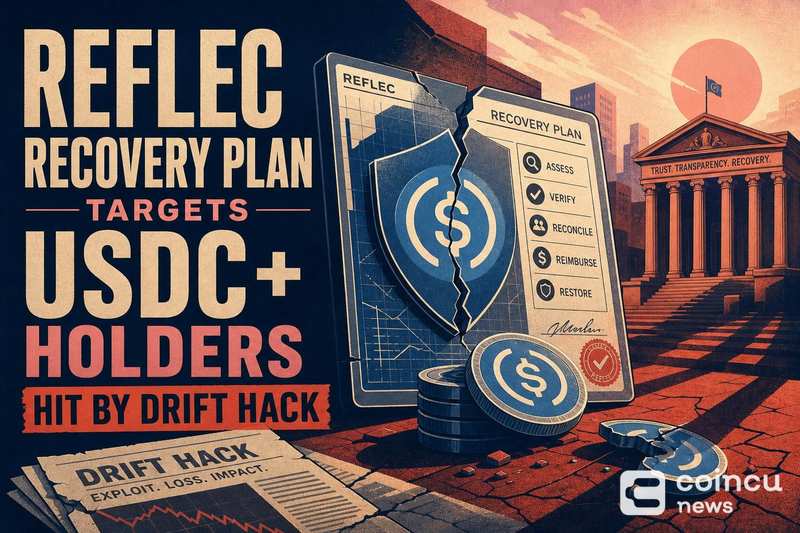
Reflec has announced plans to launch a recovery plan for USDC+ position holders who were affected by the Drift protocol hack, a security incident that resulted in approximately $286 million in losses. The commitment marks one of the more direct recovery responses from a downstream protocol impacted by the exploit.
What Reflec has actually said about the USDC+ recovery plan
What is confirmed right now
Reflec communicated through its official X account that it intends to launch a recovery plan targeting USDC+ position holders who sustained losses tied to the Drift hack. The announcement from Reflec confirms the project’s intent to address the fallout, though the statement describes a plan rather than a completed reimbursement. For related coverage, see Unstaked $1M Launch Plan May Surpass Celestia and XRP Gains.
The recovery commitment appears to cover holders who maintained USDC+ positions at the time the Drift exploit created downstream exposure. Reflec’s platform had integration with Drift that left certain structured positions vulnerable when the hack occurred. For related coverage, see Dogecoin Eyes $0.30, Pi Coin Unlock Raises Pressure, Dragoin’s 200B Token Cap Targets 1000x Breakout.
What has not been confirmed yet
Key details remain absent from public communications. Reflec has not disclosed the total value of affected USDC+ positions, the specific compensation mechanics, or a firm timeline for when recovery distributions would begin.
No snapshot date, claims portal, or eligibility criteria have been published. The gap between announcing a recovery plan and executing one can be significant, and holders should treat the commitment as a stated intention rather than a guaranteed outcome.
How the Drift hack created exposure for USDC+ holders
Where USDC+ holders were exposed
The Drift protocol was exploited in an attack that blockchain analytics firm Elliptic described as a suspected DPRK-linked incident involving $286 million. The exploit drained funds from Drift, which served as infrastructure for several downstream DeFi products including Reflec’s USDC+ positions.
USDC+ holders were exposed because their positions relied on Drift’s smart contracts for yield generation or liquidity management. When the hack drained protocol funds, the value backing those positions was compromised, similar to how DeFi protocols like Aave expand across chains to diversify infrastructure risk.
Which incident details still require confirmation
The exact proportion of stolen funds that belonged to or affected USDC+ holders specifically has not been disclosed. Circle faced criticism for its response to the hack, with CoinDesk reporting that the stablecoin issuer was questioned over its decision not to freeze stolen USDC.
Whether Reflec’s recovery plan depends on any fund recovery from the original exploit, insurance coverage, or treasury reserves remains unclear.
What holders need to know about eligibility, timing, and unresolved terms
Who may qualify
Reflec’s language refers to “USDC+ position holders affected by the Drift hack,” suggesting eligibility will be defined by holding USDC+ positions at the time of the exploit. Whether this includes all USDC+ holders or only those with positions routed through Drift-linked vaults has not been specified.
Holders who exited positions before the hack or entered after may fall outside the recovery scope, though Reflec has not published formal eligibility rules.
What holders should watch for next
The most important signals for affected users will be an official eligibility announcement, a snapshot methodology, and a claims process. Reflec’s earlier communications on X have served as the primary channel for updates.
Holders should monitor Reflec’s official accounts and the platform’s app for formal terms. Until a claims process is live, no action is required from position holders.
Why this matters for DeFi recovery expectations
What this signals for DeFi incident response
Reflec’s recovery commitment stands out because downstream protocols affected by exploits on integrated infrastructure often have no obligation to make users whole. When a hack occurs at the base layer, as with Drift, protocols built on top of it frequently disclaim responsibility. The growing ecosystem of companies holding significant crypto reserves has increased scrutiny on how losses are handled across interconnected platforms.
Whether Reflec can deliver on its stated plan will test whether voluntary recovery commitments from DeFi protocols are credible or primarily reputational exercises.
Why USDC+ trust matters after a hack-linked disruption
Structured stablecoin products like USDC+ depend on user confidence that the underlying infrastructure is sound. A hack that drains funds from an integrated protocol undermines that confidence directly, regardless of whether the stablecoin’s own contracts were compromised.
For Reflec, the recovery plan is as much about restoring product credibility as it is about compensating individual holders. The broader DeFi market, where protocol deployments across new chains continue to expand attack surfaces, will watch whether the plan sets a precedent for downstream accountability.
FAQ: What USDC+ holders should ask next
Has Reflec confirmed how affected holders will be made whole?
No. Reflec has stated its intention to launch a recovery plan but has not published the compensation structure, funding source, or payout methodology. Holders should treat all specifics as pending until formal terms are released.
When could the recovery plan be implemented?
No timeline has been announced. Recovery plans in DeFi can take weeks to months depending on the complexity of snapshot calculations, fund availability, and any dependencies on broader incident resolution. Reflec has not indicated whether the plan is contingent on recovering funds from the original exploit.
What should USDC+ holders monitor before the next update?
Holders should watch Reflec’s official X account and the Reflect Money platform for formal eligibility criteria, snapshot dates, and claims instructions. No action is required from holders until a claims process goes live.
Disclaimer: This article is for informational purposes only and does not constitute financial or investment advice. Cryptocurrency and digital asset markets carry significant risk. Always do your own research before making decisions.
No tags available.


Other Posts








- China, US Conclude Trade Talks with Focus on Cooperation
- Crypto Weekly: NYSE Backs OKX, Kraken Gets Fed Access, BTC Sells
- DeriW Launches Edge Hour Trading Competition Platform for Derivatives Traders
- Court Upholds Fed’s Rejection of Custodia Bank’s Request
- Former CFO Convicted for $35M Fraudulent Crypto Investment
- Michael Saylor Denies Bitcoin Sell-Off Amid Large BTC Transfer
- Buy Dogecoin on eToro: Step-by-Step Guide for Beginners (2024)
- Kazakhstan Explores Crypto Reserves Backed by National Funds
- JPMorgan Increases Holdings in BlackRock’s Bitcoin ETF
- Nordea Bank Introduces Bitcoin ETP Trading for Nordic Customers
- XRP Spot ETF Launches on Nasdaq Amid Market Fluctuations
- Peter Schiff Challenges Michael Saylor on MSTR’s Business Model
- Thailand Orders Worldcoin to Delete 1.2 Million Biometric Records
- UK Proposes New DeFi Tax Framework to Ease User Burden
- WLFI Under Fire: Analyst Warns Hyperliquid Could Be Next
- Ancient Ethereum Whale Moves $1.19 Billion After Decade
- BlackRock Receives Large Crypto Transfers from Coinbase
- SEC Scrutiny on ALT5 Sigma’s Leadership Disclosure Timing
- Yala Injects $5.5 Million Amid Recovery Efforts
- Radiant Capital Faces $50M Loss in Major Security Breach
- China, US Conclude Trade Talks with Focus on Cooperation
- Crypto Weekly: NYSE Backs OKX, Kraken Gets Fed Access, BTC Sells
- DeriW Launches Edge Hour Trading Competition Platform for Derivatives Traders
- Court Upholds Fed’s Rejection of Custodia Bank’s Request
- Former CFO Convicted for $35M Fraudulent Crypto Investment
- Michael Saylor Denies Bitcoin Sell-Off Amid Large BTC Transfer
- Buy Dogecoin on eToro: Step-by-Step Guide for Beginners (2024)
- Kazakhstan Explores Crypto Reserves Backed by National Funds
- JPMorgan Increases Holdings in BlackRock’s Bitcoin ETF
- Nordea Bank Introduces Bitcoin ETP Trading for Nordic Customers
- XRP Spot ETF Launches on Nasdaq Amid Market Fluctuations
- Peter Schiff Challenges Michael Saylor on MSTR’s Business Model
- Thailand Orders Worldcoin to Delete 1.2 Million Biometric Records
- UK Proposes New DeFi Tax Framework to Ease User Burden
- WLFI Under Fire: Analyst Warns Hyperliquid Could Be Next
- Ancient Ethereum Whale Moves $1.19 Billion After Decade
- BlackRock Receives Large Crypto Transfers from Coinbase
- SEC Scrutiny on ALT5 Sigma’s Leadership Disclosure Timing
- Yala Injects $5.5 Million Amid Recovery Efforts
- Radiant Capital Faces $50M Loss in Major Security Breach
- China, US Conclude Trade Talks with Focus on Cooperation
- Crypto Weekly: NYSE Backs OKX, Kraken Gets Fed Access, BTC Sells
- DeriW Launches Edge Hour Trading Competition Platform for Derivatives Traders
- Court Upholds Fed’s Rejection of Custodia Bank’s Request
- Former CFO Convicted for $35M Fraudulent Crypto Investment
- Michael Saylor Denies Bitcoin Sell-Off Amid Large BTC Transfer
- Buy Dogecoin on eToro: Step-by-Step Guide for Beginners (2024)
- Kazakhstan Explores Crypto Reserves Backed by National Funds
- JPMorgan Increases Holdings in BlackRock’s Bitcoin ETF
- Nordea Bank Introduces Bitcoin ETP Trading for Nordic Customers
- XRP Spot ETF Launches on Nasdaq Amid Market Fluctuations
- Peter Schiff Challenges Michael Saylor on MSTR’s Business Model
- Thailand Orders Worldcoin to Delete 1.2 Million Biometric Records
- UK Proposes New DeFi Tax Framework to Ease User Burden
- WLFI Under Fire: Analyst Warns Hyperliquid Could Be Next
- Ancient Ethereum Whale Moves $1.19 Billion After Decade
- BlackRock Receives Large Crypto Transfers from Coinbase
- SEC Scrutiny on ALT5 Sigma’s Leadership Disclosure Timing
- Yala Injects $5.5 Million Amid Recovery Efforts
- Radiant Capital Faces $50M Loss in Major Security Breach