SEC 2026 Regulatory Agenda Statement Targets Tokenized Securities and Crypto Rules
The U.S. Securities and Exchange Commission has released its 2026 regulatory agenda statement, outlining priorities that include tokenized securities trading and broader crypto rulemaking. The statement positions these topics as formal regulatory priorities rather than exploratory discussions, signaling that concrete policy action may follow.
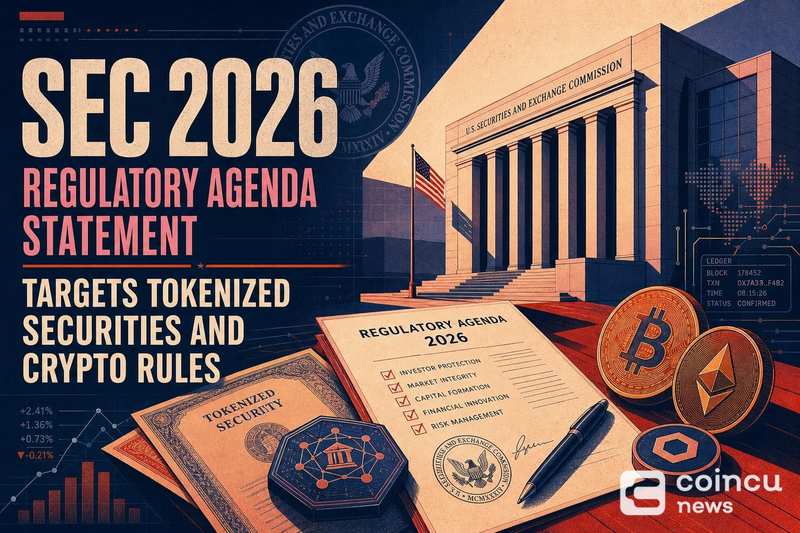
What the SEC’s 2026 Agenda Statement Covers
SEC Chairman Paul Atkins issued a statement on the 2026 regulatory agenda that specifically addresses tokenized securities trading and crypto-related rulemaking. The agenda reflects items the Commission considers active regulatory priorities for the current period. For related coverage, see Fairshake advances after early 2026 primary victories.
The inclusion of tokenized securities and crypto assets in a formal regulatory agenda is significant because it moves these topics from informal guidance territory into the structured rulemaking pipeline. Agenda items published through the Unified Agenda on RegInfo.gov indicate where agencies plan to direct rulemaking resources. For related coverage, see Proof of Talk Flips the Events Model With the First Crypto Content Council & Podcast PowerHouse.
This is not the first time the SEC has addressed digital assets under the current leadership. Earlier this year, the Commission’s Division of Corporation Finance issued a statement on tokenized securities that began clarifying how existing securities laws apply to blockchain-based representations of traditional financial instruments.
Tokenized Securities vs. Crypto Assets: Why the Distinction Matters
Tokenized securities are blockchain-based representations of instruments that already qualify as securities, such as stocks, bonds, or fund shares. They differ from crypto assets like Bitcoin or Ether, which face ongoing classification debates.
By focusing on tokenized securities, the SEC is addressing an area where its jurisdictional authority is clearest. Trading venue structure, custody requirements, disclosure obligations, and investor protection rules all apply to securities regardless of the technology used to record or transfer them.
The practical implications fall on trading platforms, broker-dealers, and issuers working with tokenized instruments. Platforms facilitating tokenized securities trading may face compliance expectations around registration, supervision, and recordkeeping that mirror traditional securities market infrastructure.
This regulatory direction intersects with broader political dynamics. As crypto-related political spending increases ahead of the 2026 midterms, the SEC’s rulemaking choices carry additional weight for industry participants lobbying for regulatory clarity.
What Crypto Rulemaking Could Look Like
A regulatory agenda does not itself create new rules. It signals which topics may advance toward formal proposals, public comment periods, or final implementation steps. The presence of crypto rulemaking on the agenda indicates the SEC intends to allocate staff resources to developing specific regulatory frameworks.
Areas likely to be addressed include registration requirements for crypto trading platforms, disclosure standards for digital asset offerings, and custody expectations for firms holding crypto on behalf of clients. Each of these areas has been the subject of enforcement actions in recent years, but formal rulemaking would replace case-by-case enforcement with standardized obligations.
Market participants should watch for notices of proposed rulemaking, which would trigger public comment periods before any rules are finalized. The timeline from agenda inclusion to final rule can span months or years, depending on complexity and political dynamics.
Legislative efforts are developing in parallel. The ongoing push for crypto legislation in Congress could either complement or supersede SEC rulemaking, depending on the scope of any bill that advances.
Industry and Market Implications
For institutional participants, SEC agenda signals function as planning inputs. Firms developing tokenized securities products or operating crypto trading platforms can use the agenda to anticipate compliance requirements and allocate legal and technical resources accordingly.
Tokenized securities sit at a natural intersection between traditional finance and blockchain infrastructure. Banks, asset managers, and fintech firms exploring tokenization may view formal SEC rulemaking as a prerequisite for scaling their offerings, since regulatory ambiguity has been a persistent barrier to institutional adoption.
Crypto-native firms face a different calculus. Formal rulemaking could impose compliance costs that favor larger, better-capitalized operators while creating barriers for smaller platforms. However, clear rules also reduce the risk of unexpected enforcement actions that have disrupted business operations across the industry.
The agenda statement does not finalize any rules or impose immediate obligations. It is a policy signal, not a compliance deadline. Firms and investors should treat it as an indication of regulatory direction rather than a trigger for immediate operational changes.
FAQ: SEC 2026 Agenda, Tokenized Securities, and Crypto Rules
What is the SEC’s 2026 regulatory agenda statement?
It is a formal document outlining the SEC’s planned rulemaking priorities for the current regulatory period. The agenda is published as part of the federal government’s Unified Agenda process and indicates where the Commission intends to focus its resources.
What are tokenized securities?
Tokenized securities are digital representations of traditional financial instruments, such as stocks or bonds, recorded on a blockchain. Unlike cryptocurrencies, they represent ownership in assets that already fall under existing securities laws.
Does the statement create new crypto rules immediately?
No. The agenda statement signals intent, not implementation. New rules would require formal proposals, public comment periods, and Commission votes before taking effect. This process typically takes months to years.
Who could be affected most by this agenda item?
Trading platforms handling tokenized securities, broker-dealers, custodians, and issuers of digital securities face the most direct impact. Crypto exchanges that may be offering instruments classifiable as securities could also face new obligations depending on how rulemaking develops.
Disclaimer: This article is for informational purposes only and does not constitute financial or investment advice. Cryptocurrency and digital asset markets carry significant risk. Always do your own research before making decisions.
No tags available.


Other Posts








- China, US Conclude Trade Talks with Focus on Cooperation
- Crypto Weekly: NYSE Backs OKX, Kraken Gets Fed Access, BTC Sells
- Court Upholds Fed’s Rejection of Custodia Bank’s Request
- DeriW Launches Edge Hour Trading Competition Platform for Derivatives Traders
- Former CFO Convicted for $35M Fraudulent Crypto Investment
- Michael Saylor Denies Bitcoin Sell-Off Amid Large BTC Transfer
- Buy Dogecoin on eToro: Step-by-Step Guide for Beginners (2024)
- Kazakhstan Explores Crypto Reserves Backed by National Funds
- JPMorgan Increases Holdings in BlackRock’s Bitcoin ETF
- Nordea Bank Introduces Bitcoin ETP Trading for Nordic Customers
- XRP Spot ETF Launches on Nasdaq Amid Market Fluctuations
- Peter Schiff Challenges Michael Saylor on MSTR’s Business Model
- Thailand Orders Worldcoin to Delete 1.2 Million Biometric Records
- UK Proposes New DeFi Tax Framework to Ease User Burden
- WLFI Under Fire: Analyst Warns Hyperliquid Could Be Next
- Ancient Ethereum Whale Moves $1.19 Billion After Decade
- BlackRock Receives Large Crypto Transfers from Coinbase
- SEC Scrutiny on ALT5 Sigma’s Leadership Disclosure Timing
- Yala Injects $5.5 Million Amid Recovery Efforts
- Radiant Capital Faces $50M Loss in Major Security Breach
- China, US Conclude Trade Talks with Focus on Cooperation
- Crypto Weekly: NYSE Backs OKX, Kraken Gets Fed Access, BTC Sells
- Court Upholds Fed’s Rejection of Custodia Bank’s Request
- DeriW Launches Edge Hour Trading Competition Platform for Derivatives Traders
- Former CFO Convicted for $35M Fraudulent Crypto Investment
- Michael Saylor Denies Bitcoin Sell-Off Amid Large BTC Transfer
- Buy Dogecoin on eToro: Step-by-Step Guide for Beginners (2024)
- Kazakhstan Explores Crypto Reserves Backed by National Funds
- JPMorgan Increases Holdings in BlackRock’s Bitcoin ETF
- Nordea Bank Introduces Bitcoin ETP Trading for Nordic Customers
- XRP Spot ETF Launches on Nasdaq Amid Market Fluctuations
- Peter Schiff Challenges Michael Saylor on MSTR’s Business Model
- Thailand Orders Worldcoin to Delete 1.2 Million Biometric Records
- UK Proposes New DeFi Tax Framework to Ease User Burden
- WLFI Under Fire: Analyst Warns Hyperliquid Could Be Next
- Ancient Ethereum Whale Moves $1.19 Billion After Decade
- BlackRock Receives Large Crypto Transfers from Coinbase
- SEC Scrutiny on ALT5 Sigma’s Leadership Disclosure Timing
- Yala Injects $5.5 Million Amid Recovery Efforts
- Radiant Capital Faces $50M Loss in Major Security Breach
- China, US Conclude Trade Talks with Focus on Cooperation
- Crypto Weekly: NYSE Backs OKX, Kraken Gets Fed Access, BTC Sells
- Court Upholds Fed’s Rejection of Custodia Bank’s Request
- DeriW Launches Edge Hour Trading Competition Platform for Derivatives Traders
- Former CFO Convicted for $35M Fraudulent Crypto Investment
- Michael Saylor Denies Bitcoin Sell-Off Amid Large BTC Transfer
- Buy Dogecoin on eToro: Step-by-Step Guide for Beginners (2024)
- Kazakhstan Explores Crypto Reserves Backed by National Funds
- JPMorgan Increases Holdings in BlackRock’s Bitcoin ETF
- Nordea Bank Introduces Bitcoin ETP Trading for Nordic Customers
- XRP Spot ETF Launches on Nasdaq Amid Market Fluctuations
- Peter Schiff Challenges Michael Saylor on MSTR’s Business Model
- Thailand Orders Worldcoin to Delete 1.2 Million Biometric Records
- UK Proposes New DeFi Tax Framework to Ease User Burden
- WLFI Under Fire: Analyst Warns Hyperliquid Could Be Next
- Ancient Ethereum Whale Moves $1.19 Billion After Decade
- BlackRock Receives Large Crypto Transfers from Coinbase
- SEC Scrutiny on ALT5 Sigma’s Leadership Disclosure Timing
- Yala Injects $5.5 Million Amid Recovery Efforts
- Radiant Capital Faces $50M Loss in Major Security Breach
SEC 2026 Regulatory Agenda Statement Targets Tokenized Securities and Crypto Rules


On-Chain Tokenized Stock Trading Volume Hits Record $3.86B in June

Bitcoin Suisse Advances Middle East Expansion, Receives Financial Services Permission in Abu Dhabi
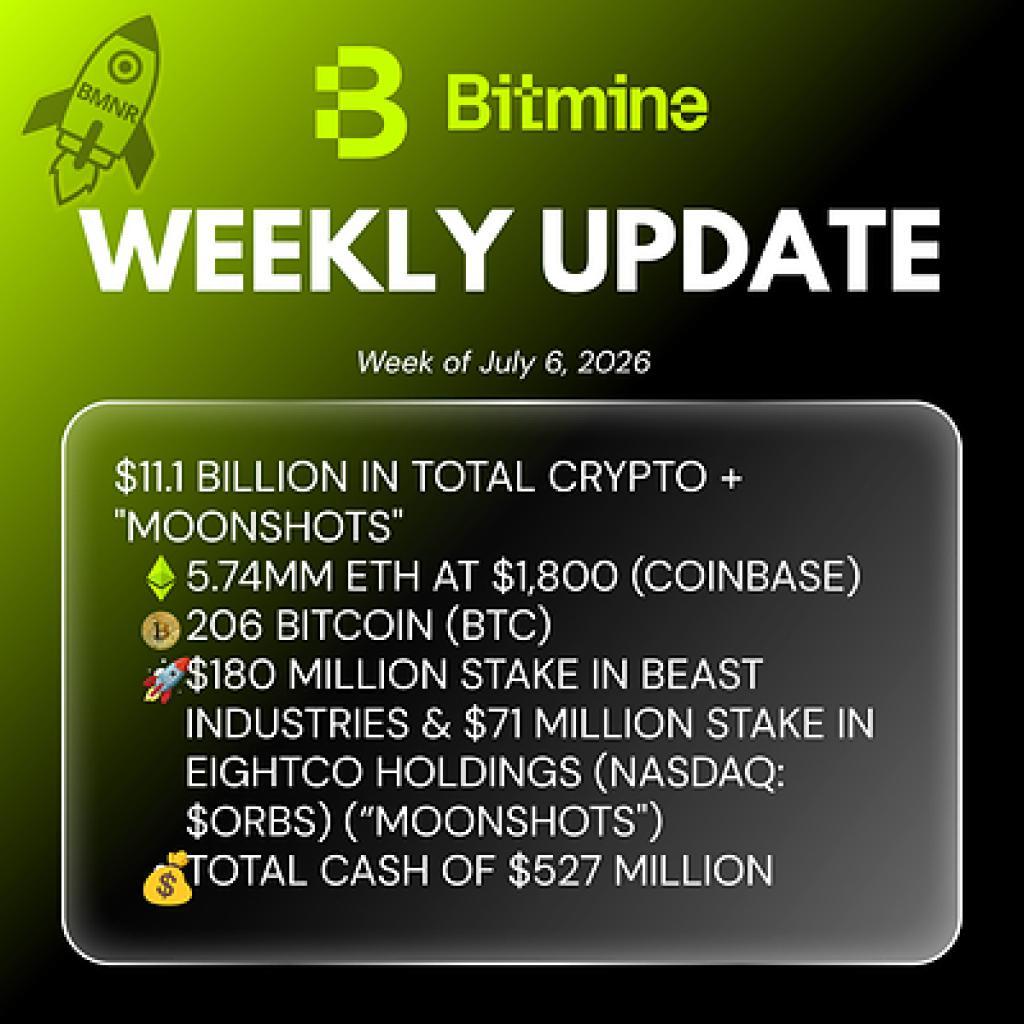
Bitmine Immersion Technologies (BMNR) Announces Total Crypto and Cash Holdings Top $11.1 Billion Now