Bitcoin Rebound Erased by $92.7M Selling Pressure as $62,000 Becomes Key Resistance
Bitcoin’s short-term rebound was erased after $92.7 million in selling pressure overwhelmed buyers, with analysts now identifying $62,000 as the critical resistance level that bulls must reclaim to restore upward momentum.
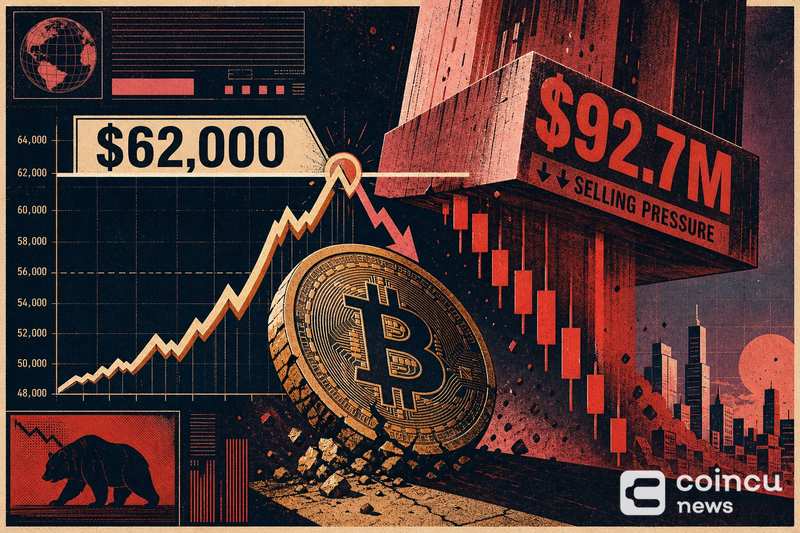
The failed recovery attempt highlights fragile sentiment in the Bitcoin market. What initially appeared to be a bounce from recent lows quickly reversed as sellers stepped in with enough volume to neutralize the move entirely. For related coverage, see SpaceX Bitcoin Test Transaction Ends 6-Month Silence.
$92.7 Million in Selling Pressure Erased the Recovery
The rebound, which unfolded over a short timeframe, was met by concentrated selling totaling $92.7 million. That figure represents the net sell-side pressure that absorbed all buying momentum during the attempted recovery, according to analyst observations.
This level of selling activity during a rebound attempt suggests that larger market participants were using the brief uptick as an exit opportunity rather than a signal to accumulate. When sell volume of this magnitude appears during a bounce, it typically indicates that overhead supply remains heavy, a dynamic also visible during periods of deepening selling pressure across other assets.
The pattern echoes dynamics seen during Bitcoin’s previous rebounds near the $60,000 zone, where recovery attempts struggled against persistent distribution from short-term holders.
Why $62,000 Is the Resistance Level to Watch
Analysts have flagged $62,000 as the key resistance level following the failed breakout. A resistance level is a price zone where selling interest has historically been strong enough to prevent further upward movement.
The $62,000 threshold now represents the point where the rebound was rejected. Until Bitcoin can produce a sustained close above that level with sufficient volume, the path of least resistance remains sideways or lower.
Market sentiment tools such as the Fear and Greed Index provide additional context during periods of failed recoveries like this one, often reflecting elevated fear when short-term bounces are quickly sold into.
Bitcoin’s spot market data shows the broader pricing context around the $62,000 zone, where the rebound stalled and sellers regained control.
What the Failed Breakout Signals for the Near Term
A rebound that gets fully erased by selling pressure points to weak buying follow-through. Short-term bulls were unable to attract enough new demand to sustain higher prices, leaving the market vulnerable to further downside if support levels below fail to hold.
Two scenarios emerge around the $62,000 resistance. In a bullish case, Bitcoin consolidates below that level, builds a base of support, and eventually breaks through with stronger volume. This would suggest the selling pressure has been absorbed.
In a bearish case, repeated failures at $62,000 could lead to a deeper pullback as traders lose confidence in the recovery narrative. The inability to reclaim resistance after multiple attempts often precedes a move to retest lower support zones.
The situation mirrors broader volatility patterns seen across Bitcoin markets recently, including periods where ETF inflows rebounded despite elevated market volatility, suggesting that institutional and retail participants may be reading the same price action differently.
Institutional flows and corporate Bitcoin accumulation activity will be important signals to monitor alongside the $62,000 resistance test, as they can indicate whether larger players view the current price zone as a buying opportunity or a distribution zone.
FAQ
Why did Bitcoin’s rebound fail?
The rebound was overwhelmed by $92.7 million in selling pressure. Sellers used the brief price recovery as an opportunity to exit positions, absorbing all buying momentum before prices could establish a new higher range.
What does the $62,000 resistance level mean?
The $62,000 level is where selling interest proved strong enough to halt the rebound. It now acts as a ceiling that Bitcoin must break above with conviction before a sustained recovery becomes likely.
What is selling pressure in this context?
Selling pressure refers to the aggregate volume of sell orders that hit the market during the rebound attempt. The $92.7 million figure quantifies the net selling that reversed the short-term price recovery.
Disclaimer: This article is for informational purposes only and does not constitute financial or investment advice. Cryptocurrency and digital asset markets carry significant risk. Always do your own research before making decisions.
No tags available.


Other Posts








- China, US Conclude Trade Talks with Focus on Cooperation
- Crypto Weekly: NYSE Backs OKX, Kraken Gets Fed Access, BTC Sells
- Court Upholds Fed’s Rejection of Custodia Bank’s Request
- DeriW Launches Edge Hour Trading Competition Platform for Derivatives Traders
- Former CFO Convicted for $35M Fraudulent Crypto Investment
- Michael Saylor Denies Bitcoin Sell-Off Amid Large BTC Transfer
- Buy Dogecoin on eToro: Step-by-Step Guide for Beginners (2024)
- Kazakhstan Explores Crypto Reserves Backed by National Funds
- JPMorgan Increases Holdings in BlackRock’s Bitcoin ETF
- Nordea Bank Introduces Bitcoin ETP Trading for Nordic Customers
- XRP Spot ETF Launches on Nasdaq Amid Market Fluctuations
- Peter Schiff Challenges Michael Saylor on MSTR’s Business Model
- Thailand Orders Worldcoin to Delete 1.2 Million Biometric Records
- UK Proposes New DeFi Tax Framework to Ease User Burden
- WLFI Under Fire: Analyst Warns Hyperliquid Could Be Next
- Ancient Ethereum Whale Moves $1.19 Billion After Decade
- BlackRock Receives Large Crypto Transfers from Coinbase
- SEC Scrutiny on ALT5 Sigma’s Leadership Disclosure Timing
- Yala Injects $5.5 Million Amid Recovery Efforts
- Radiant Capital Faces $50M Loss in Major Security Breach
- China, US Conclude Trade Talks with Focus on Cooperation
- Crypto Weekly: NYSE Backs OKX, Kraken Gets Fed Access, BTC Sells
- Court Upholds Fed’s Rejection of Custodia Bank’s Request
- DeriW Launches Edge Hour Trading Competition Platform for Derivatives Traders
- Former CFO Convicted for $35M Fraudulent Crypto Investment
- Michael Saylor Denies Bitcoin Sell-Off Amid Large BTC Transfer
- Buy Dogecoin on eToro: Step-by-Step Guide for Beginners (2024)
- Kazakhstan Explores Crypto Reserves Backed by National Funds
- JPMorgan Increases Holdings in BlackRock’s Bitcoin ETF
- Nordea Bank Introduces Bitcoin ETP Trading for Nordic Customers
- XRP Spot ETF Launches on Nasdaq Amid Market Fluctuations
- Peter Schiff Challenges Michael Saylor on MSTR’s Business Model
- Thailand Orders Worldcoin to Delete 1.2 Million Biometric Records
- UK Proposes New DeFi Tax Framework to Ease User Burden
- WLFI Under Fire: Analyst Warns Hyperliquid Could Be Next
- Ancient Ethereum Whale Moves $1.19 Billion After Decade
- BlackRock Receives Large Crypto Transfers from Coinbase
- SEC Scrutiny on ALT5 Sigma’s Leadership Disclosure Timing
- Yala Injects $5.5 Million Amid Recovery Efforts
- Radiant Capital Faces $50M Loss in Major Security Breach
- China, US Conclude Trade Talks with Focus on Cooperation
- Crypto Weekly: NYSE Backs OKX, Kraken Gets Fed Access, BTC Sells
- Court Upholds Fed’s Rejection of Custodia Bank’s Request
- DeriW Launches Edge Hour Trading Competition Platform for Derivatives Traders
- Former CFO Convicted for $35M Fraudulent Crypto Investment
- Michael Saylor Denies Bitcoin Sell-Off Amid Large BTC Transfer
- Buy Dogecoin on eToro: Step-by-Step Guide for Beginners (2024)
- Kazakhstan Explores Crypto Reserves Backed by National Funds
- JPMorgan Increases Holdings in BlackRock’s Bitcoin ETF
- Nordea Bank Introduces Bitcoin ETP Trading for Nordic Customers
- XRP Spot ETF Launches on Nasdaq Amid Market Fluctuations
- Peter Schiff Challenges Michael Saylor on MSTR’s Business Model
- Thailand Orders Worldcoin to Delete 1.2 Million Biometric Records
- UK Proposes New DeFi Tax Framework to Ease User Burden
- WLFI Under Fire: Analyst Warns Hyperliquid Could Be Next
- Ancient Ethereum Whale Moves $1.19 Billion After Decade
- BlackRock Receives Large Crypto Transfers from Coinbase
- SEC Scrutiny on ALT5 Sigma’s Leadership Disclosure Timing
- Yala Injects $5.5 Million Amid Recovery Efforts
- Radiant Capital Faces $50M Loss in Major Security Breach

Bitcoin Rebound Erased by $92.7M Selling Pressure as $62,000 Becomes Key Resistance

BSTR Deal Collapses After $1.5B Financing Fails; American Bitcoin Adds 500 BTC


Bitcoin Suisse Advances Middle East Expansion, Receives Financial Services Permission in Abu Dhabi
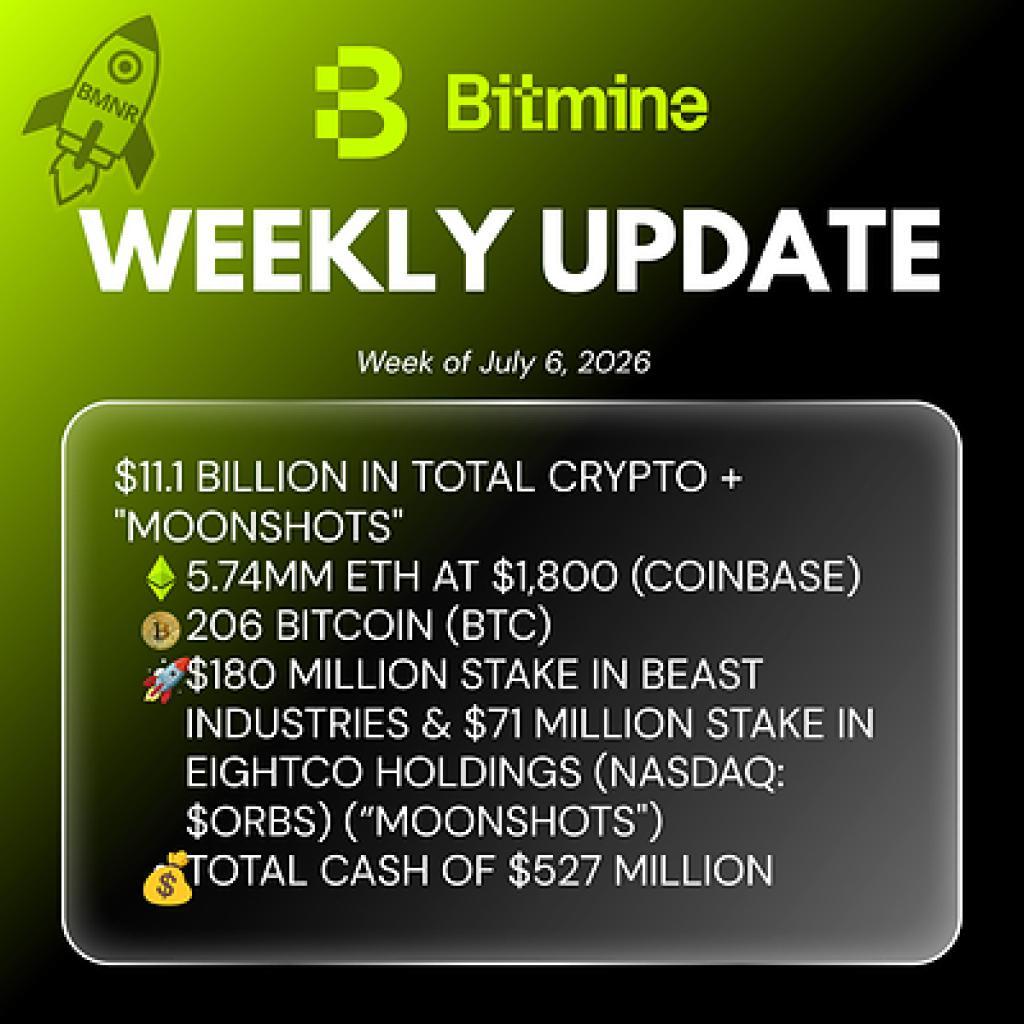
Bitmine Immersion Technologies (BMNR) Announces Total Crypto and Cash Holdings Top $11.1 Billion Now