South Korea’s Finance Ministry is planning state asset legislation that would explicitly cover cryptocurrencies, a move that signals formal government attention to how digital assets fit within the country’s public asset framework. The proposal remains at the planning stage and has not been enacted into law.

A Finance Ministry Proposal, Still at the Planning Stage
The initiative is being led by South Korea’s Ministry of Economy and Finance, the government body responsible for national fiscal and asset policy, the ministry that oversees state asset administration. For related coverage, see Vietnam Plans Crypto Asset Pilot to Regulate Domestic Trading.
What is on the table is a plan rather than a passed statute. The development has been framed as a legislative proposal, meaning it would still need to move through drafting and approval before taking effect. For related coverage, see Crypto Market Highlights July 28, 2022.
In plain terms, the ministry intends to prepare legislation covering state assets that would bring cryptocurrencies within its scope, as reported by Yonhap News. For related coverage, see Russia to Monitor Crypto Transactions Above 60,000 Rubles.
What “Covering Cryptocurrencies” Signals
The central policy hook is scope. Including cryptocurrencies in a state asset legislative framework is a form of formal recognition that digital assets belong within government asset policy, according to reporting from Chosun Biz.
Scope is not the same as implementation. The available reporting establishes that cryptocurrencies would be covered, but it does not confirm the definitions, custody arrangements, or enforcement mechanics that any final legislation might contain.
Readers should treat unstated details with caution. Claims about how such assets would be defined or managed are not supported by the current reporting and should not be assumed.
Why Ministry Involvement Matters
A finance ministry-led proposal indicates high-level institutional attention rather than informal commentary. The involvement of a core economic ministry places the discussion within official policy channels.
Legislation is also a stronger signal than rhetoric. Pursuing a statutory route, rather than issuing guidance, suggests the government is seeking a durable legal basis for how it treats crypto within state assets.
For readers, the significance is that digital assets are being addressed at the level of national asset law. That framing sits alongside other regional moves toward formal crypto rules, such as Vietnam’s crypto asset pilot aimed at regulating domestic trading.
What Remains Unconfirmed
Because the measure is described as a plan, further procedural steps such as a draft release, legislative debate, or public clarification are likely still required before anything is finalized.
Timing, final wording, and approval status are not confirmed in the available reporting. The proposal stage means key details could still change.
Immediate implementation should not be assumed. The story to watch is whether the ministry publishes draft text and how any scope covering cryptocurrencies is ultimately defined.
South Korea has been active on adjacent financial and market fronts, including coordinating with Japan and allies on exchange rates, while its crypto sector has seen structural moves like Mirae Asset’s approved acquisition of a majority stake in exchange Korbit.
FAQ
Is the legislation already in force?
No. The reporting describes a planned measure, not an enacted law. Further steps would be required before it takes effect.
What does “covering cryptocurrencies” mean here?
It indicates that cryptocurrencies would fall within the scope of the proposed state asset legislation. The precise definitions and mechanics are not confirmed in the available reporting.
Why does the Finance Ministry’s role matter?
The ministry oversees national asset policy, so its involvement places crypto within an official, high-level policy process rather than informal guidance.
Disclaimer: This article is for informational purposes only and does not constitute financial or investment advice. Cryptocurrency and digital asset markets carry significant risk. Always do your own research before making decisions.
No tags available.


Other Posts







- China, US Conclude Trade Talks with Focus on Cooperation
- Crypto Weekly: NYSE Backs OKX, Kraken Gets Fed Access, BTC Sells
- Court Upholds Fed’s Rejection of Custodia Bank’s Request
- Former CFO Convicted for $35M Fraudulent Crypto Investment
- DeriW Launches Edge Hour Trading Competition Platform for Derivatives Traders
- Michael Saylor Denies Bitcoin Sell-Off Amid Large BTC Transfer
- Buy Dogecoin on eToro: Step-by-Step Guide for Beginners (2024)
- Kazakhstan Explores Crypto Reserves Backed by National Funds
- JPMorgan Increases Holdings in BlackRock’s Bitcoin ETF
- Nordea Bank Introduces Bitcoin ETP Trading for Nordic Customers
- XRP Spot ETF Launches on Nasdaq Amid Market Fluctuations
- Peter Schiff Challenges Michael Saylor on MSTR’s Business Model
- Thailand Orders Worldcoin to Delete 1.2 Million Biometric Records
- UK Proposes New DeFi Tax Framework to Ease User Burden
- WLFI Under Fire: Analyst Warns Hyperliquid Could Be Next
- Ancient Ethereum Whale Moves $1.19 Billion After Decade
- BlackRock Receives Large Crypto Transfers from Coinbase
- SEC Scrutiny on ALT5 Sigma’s Leadership Disclosure Timing
- Yala Injects $5.5 Million Amid Recovery Efforts
- Radiant Capital Faces $50M Loss in Major Security Breach
- China, US Conclude Trade Talks with Focus on Cooperation
- Crypto Weekly: NYSE Backs OKX, Kraken Gets Fed Access, BTC Sells
- Court Upholds Fed’s Rejection of Custodia Bank’s Request
- Former CFO Convicted for $35M Fraudulent Crypto Investment
- DeriW Launches Edge Hour Trading Competition Platform for Derivatives Traders
- Michael Saylor Denies Bitcoin Sell-Off Amid Large BTC Transfer
- Buy Dogecoin on eToro: Step-by-Step Guide for Beginners (2024)
- Kazakhstan Explores Crypto Reserves Backed by National Funds
- JPMorgan Increases Holdings in BlackRock’s Bitcoin ETF
- Nordea Bank Introduces Bitcoin ETP Trading for Nordic Customers
- XRP Spot ETF Launches on Nasdaq Amid Market Fluctuations
- Peter Schiff Challenges Michael Saylor on MSTR’s Business Model
- Thailand Orders Worldcoin to Delete 1.2 Million Biometric Records
- UK Proposes New DeFi Tax Framework to Ease User Burden
- WLFI Under Fire: Analyst Warns Hyperliquid Could Be Next
- Ancient Ethereum Whale Moves $1.19 Billion After Decade
- BlackRock Receives Large Crypto Transfers from Coinbase
- SEC Scrutiny on ALT5 Sigma’s Leadership Disclosure Timing
- Yala Injects $5.5 Million Amid Recovery Efforts
- Radiant Capital Faces $50M Loss in Major Security Breach
- China, US Conclude Trade Talks with Focus on Cooperation
- Crypto Weekly: NYSE Backs OKX, Kraken Gets Fed Access, BTC Sells
- Court Upholds Fed’s Rejection of Custodia Bank’s Request
- Former CFO Convicted for $35M Fraudulent Crypto Investment
- DeriW Launches Edge Hour Trading Competition Platform for Derivatives Traders
- Michael Saylor Denies Bitcoin Sell-Off Amid Large BTC Transfer
- Buy Dogecoin on eToro: Step-by-Step Guide for Beginners (2024)
- Kazakhstan Explores Crypto Reserves Backed by National Funds
- JPMorgan Increases Holdings in BlackRock’s Bitcoin ETF
- Nordea Bank Introduces Bitcoin ETP Trading for Nordic Customers
- XRP Spot ETF Launches on Nasdaq Amid Market Fluctuations
- Peter Schiff Challenges Michael Saylor on MSTR’s Business Model
- Thailand Orders Worldcoin to Delete 1.2 Million Biometric Records
- UK Proposes New DeFi Tax Framework to Ease User Burden
- WLFI Under Fire: Analyst Warns Hyperliquid Could Be Next
- Ancient Ethereum Whale Moves $1.19 Billion After Decade
- BlackRock Receives Large Crypto Transfers from Coinbase
- SEC Scrutiny on ALT5 Sigma’s Leadership Disclosure Timing
- Yala Injects $5.5 Million Amid Recovery Efforts
- Radiant Capital Faces $50M Loss in Major Security Breach


Binance Wallet Adds Limit Orders on Ethereum and Base for Web and App Users

EthSystems Launches to Build Privacy Solutions for Institutions on Ethereum
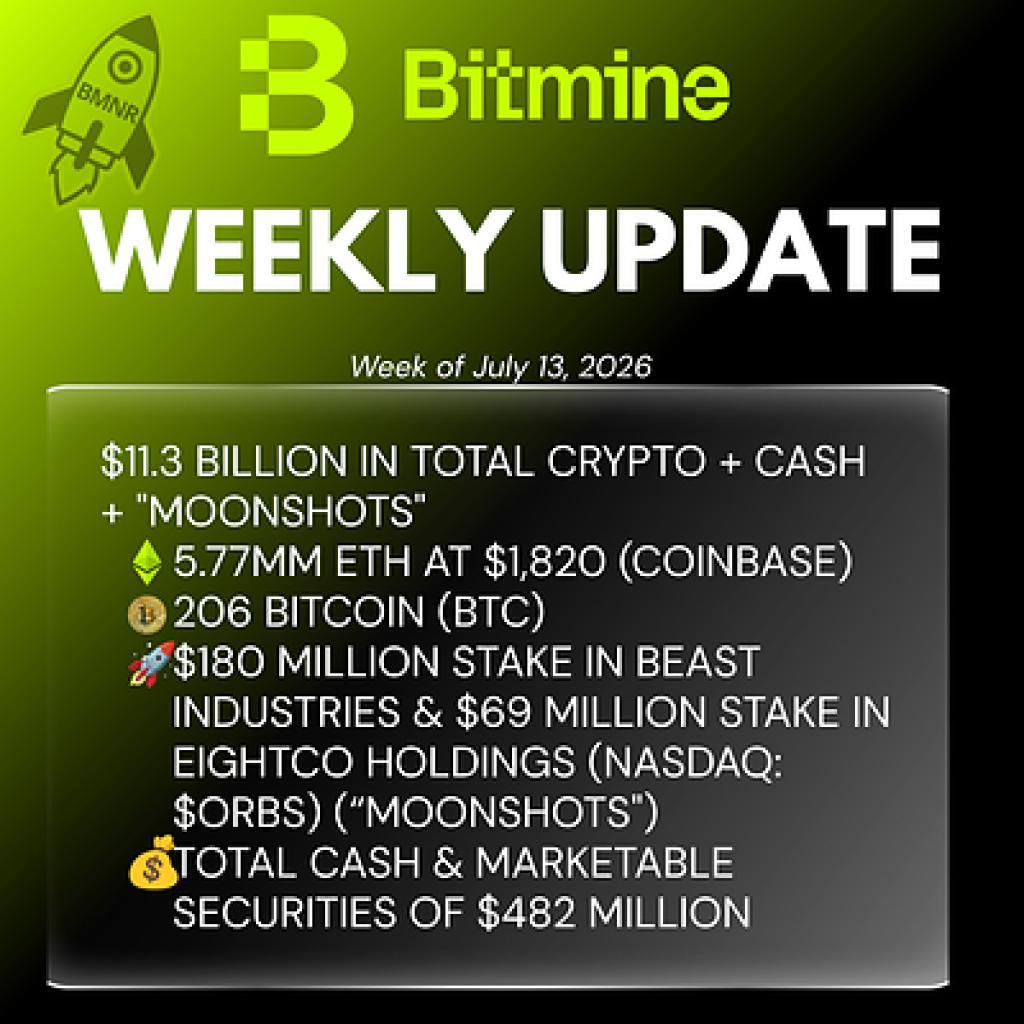
Bitmine Immersion Technologies (BMNR) Announces ETH Holdings Reach 5.77 Million Tokens, and Total Crypto and Total Cash Holdings of $11.3 Billion