BNB slipped below the $600 mark in recent trading, even as the token maintained a positive 24-hour return of roughly 1.8%. The mixed signal, a dip beneath a key round number alongside a green daily print, highlights the choppy conditions facing large-cap altcoins.
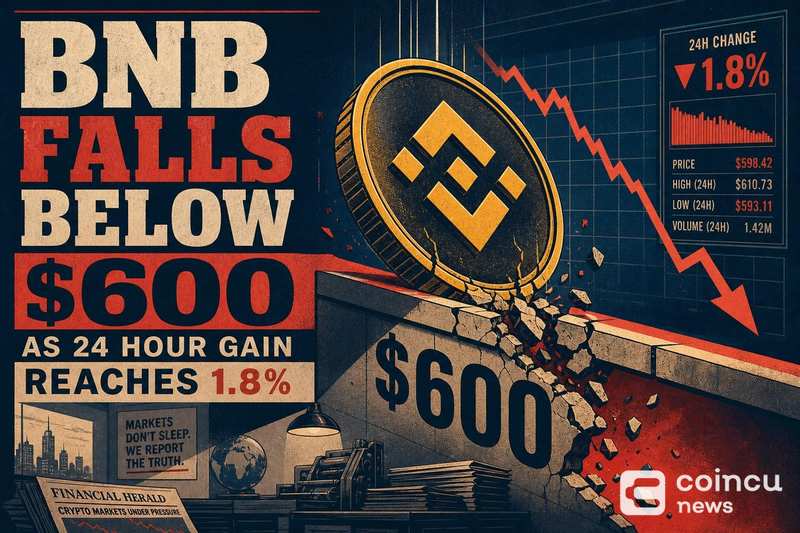
BNB Dips Below $600 While Holding a Positive Daily Return
The move below $600 places BNB at a widely watched psychological threshold. Round-number levels tend to attract concentrated buy and sell orders, making them natural reference points for short-term traders.
A 1.8% gain over 24 hours suggests that BNB had been trading at even lower levels before recovering part of its range. The token’s inability to sustain a push back above $600, however, indicates that sellers remain active near that level.
The broader crypto market showed a similar tone on June 9, with Bitcoin holding steady above $63,000 while BNB and SOL edged higher alongside a rebound in AI-related equities. That session’s modest lift likely contributed to the positive 24-hour percentage even as BNB pulled back from intraday highs.
What the $600 Threshold Means for Near-Term Positioning
Round-number levels like $600 function as informal support and resistance zones. When a token drops below such a level and fails to reclaim it quickly, traders often interpret the move as a shift in short-term momentum.
A swift reclaim above $600 would suggest that buyers view the dip as a discount. Continued trading below the level, by contrast, could invite further selling as stop-loss orders cluster just beneath round numbers.
For context, SOL has faced a similar pattern of slipping below a key round-number level in recent sessions, reinforcing the idea that altcoin traders are navigating a cautious environment rather than a broad risk-on phase.
Broader Market Signals Traders Are Watching
Short-term altcoin moves rarely happen in isolation. BNB’s direction from here depends partly on whether Bitcoin can extend its hold above the $63,000 area and whether equity markets continue their rebound.
Volume and follow-through matter more than the initial breach. A high-volume drop below $600 would carry different implications than a thin, low-conviction slide. Traders typically wait for at least one daily close below a contested level before treating it as lost support.
Developments in the broader digital asset space, such as recent outflows from U.S. Bitcoin and Ethereum ETFs, also shape risk appetite across large-cap tokens including BNB.
Why BNB’s Move Matters Beyond Its Own Holders
BNB ranks among the largest altcoins by market capitalization, and its price action often serves as a barometer for broader altcoin sentiment. When a top-five token loses a major level, it can dampen risk appetite across smaller-cap assets as well.
Mixed signals in large-cap altcoins, a positive daily return paired with a lost price level, tend to keep traders on the sideline. Allocation decisions in this environment often hinge on whether large caps like BNB stabilize or continue to fade.
Institutional flows add another dimension. Large transfers between exchanges and wallets, such as BlackRock’s recent 1,564 BTC deposit to Coinbase, can shift sentiment across the entire crypto market, BNB included.
FAQ About BNB Falling Below $600
How can BNB be below $600 but still up 1.8% in 24 hours?
The 24-hour change is measured from the price exactly 24 hours ago, not from a daily open. If BNB was trading well below $600 yesterday before rallying and then pulling back, the net change can still be positive even though the current price sits under $600.
Why is the $600 level considered important?
Round numbers attract a disproportionate share of limit orders and psychological attention. Traders and algorithms alike use these levels as reference points, making them zones of concentrated liquidity where price reactions tend to be sharper.
What do traders typically watch after a break below a key level?
The main factors are trading volume, follow-through selling, and whether the level is reclaimed within the same session or the next daily close. A quick reclaim suggests the break was a false signal; sustained trading below it points to further downside risk.
Additional source references: source document 1.
Disclaimer: This article is for informational purposes only and does not constitute financial or investment advice. Cryptocurrency and digital asset markets carry significant risk. Always do your own research before making decisions.
No tags available.


Other Posts








- China, US Conclude Trade Talks with Focus on Cooperation
- Crypto Weekly: NYSE Backs OKX, Kraken Gets Fed Access, BTC Sells
- DeriW Launches Edge Hour Trading Competition Platform for Derivatives Traders
- Court Upholds Fed’s Rejection of Custodia Bank’s Request
- Former CFO Convicted for $35M Fraudulent Crypto Investment
- Michael Saylor Denies Bitcoin Sell-Off Amid Large BTC Transfer
- Buy Dogecoin on eToro: Step-by-Step Guide for Beginners (2024)
- Kazakhstan Explores Crypto Reserves Backed by National Funds
- JPMorgan Increases Holdings in BlackRock’s Bitcoin ETF
- Nordea Bank Introduces Bitcoin ETP Trading for Nordic Customers
- XRP Spot ETF Launches on Nasdaq Amid Market Fluctuations
- Crypto Leaders Address Macro Volatility Amid Market Shifts
- Peter Schiff Challenges Michael Saylor on MSTR’s Business Model
- Thailand Orders Worldcoin to Delete 1.2 Million Biometric Records
- UK Proposes New DeFi Tax Framework to Ease User Burden
- WLFI Under Fire: Analyst Warns Hyperliquid Could Be Next
- Ancient Ethereum Whale Moves $1.19 Billion After Decade
- BlackRock Receives Large Crypto Transfers from Coinbase
- SEC Scrutiny on ALT5 Sigma’s Leadership Disclosure Timing
- MoonPay Gains Trust License for Crypto Operations in New York
- China, US Conclude Trade Talks with Focus on Cooperation
- Crypto Weekly: NYSE Backs OKX, Kraken Gets Fed Access, BTC Sells
- DeriW Launches Edge Hour Trading Competition Platform for Derivatives Traders
- Court Upholds Fed’s Rejection of Custodia Bank’s Request
- Former CFO Convicted for $35M Fraudulent Crypto Investment
- Michael Saylor Denies Bitcoin Sell-Off Amid Large BTC Transfer
- Buy Dogecoin on eToro: Step-by-Step Guide for Beginners (2024)
- Kazakhstan Explores Crypto Reserves Backed by National Funds
- JPMorgan Increases Holdings in BlackRock’s Bitcoin ETF
- Nordea Bank Introduces Bitcoin ETP Trading for Nordic Customers
- XRP Spot ETF Launches on Nasdaq Amid Market Fluctuations
- Crypto Leaders Address Macro Volatility Amid Market Shifts
- Peter Schiff Challenges Michael Saylor on MSTR’s Business Model
- Thailand Orders Worldcoin to Delete 1.2 Million Biometric Records
- UK Proposes New DeFi Tax Framework to Ease User Burden
- WLFI Under Fire: Analyst Warns Hyperliquid Could Be Next
- Ancient Ethereum Whale Moves $1.19 Billion After Decade
- BlackRock Receives Large Crypto Transfers from Coinbase
- SEC Scrutiny on ALT5 Sigma’s Leadership Disclosure Timing
- MoonPay Gains Trust License for Crypto Operations in New York
- China, US Conclude Trade Talks with Focus on Cooperation
- Crypto Weekly: NYSE Backs OKX, Kraken Gets Fed Access, BTC Sells
- DeriW Launches Edge Hour Trading Competition Platform for Derivatives Traders
- Court Upholds Fed’s Rejection of Custodia Bank’s Request
- Former CFO Convicted for $35M Fraudulent Crypto Investment
- Michael Saylor Denies Bitcoin Sell-Off Amid Large BTC Transfer
- Buy Dogecoin on eToro: Step-by-Step Guide for Beginners (2024)
- Kazakhstan Explores Crypto Reserves Backed by National Funds
- JPMorgan Increases Holdings in BlackRock’s Bitcoin ETF
- Nordea Bank Introduces Bitcoin ETP Trading for Nordic Customers
- XRP Spot ETF Launches on Nasdaq Amid Market Fluctuations
- Crypto Leaders Address Macro Volatility Amid Market Shifts
- Peter Schiff Challenges Michael Saylor on MSTR’s Business Model
- Thailand Orders Worldcoin to Delete 1.2 Million Biometric Records
- UK Proposes New DeFi Tax Framework to Ease User Burden
- WLFI Under Fire: Analyst Warns Hyperliquid Could Be Next
- Ancient Ethereum Whale Moves $1.19 Billion After Decade
- BlackRock Receives Large Crypto Transfers from Coinbase
- SEC Scrutiny on ALT5 Sigma’s Leadership Disclosure Timing
- MoonPay Gains Trust License for Crypto Operations in New York

Nearly 1,700 UK Investors Sue Binance and CZ in London for £150M

SEC launches ETF rule review focused on crypto funds and prediction markets

Sovright Launches Argos Wallet Recovery Tool for Early Zcash Users

Autheo Introduces the Internet Operating System: A Decentralized Coordination Layer for Web, Blockchain, & AI
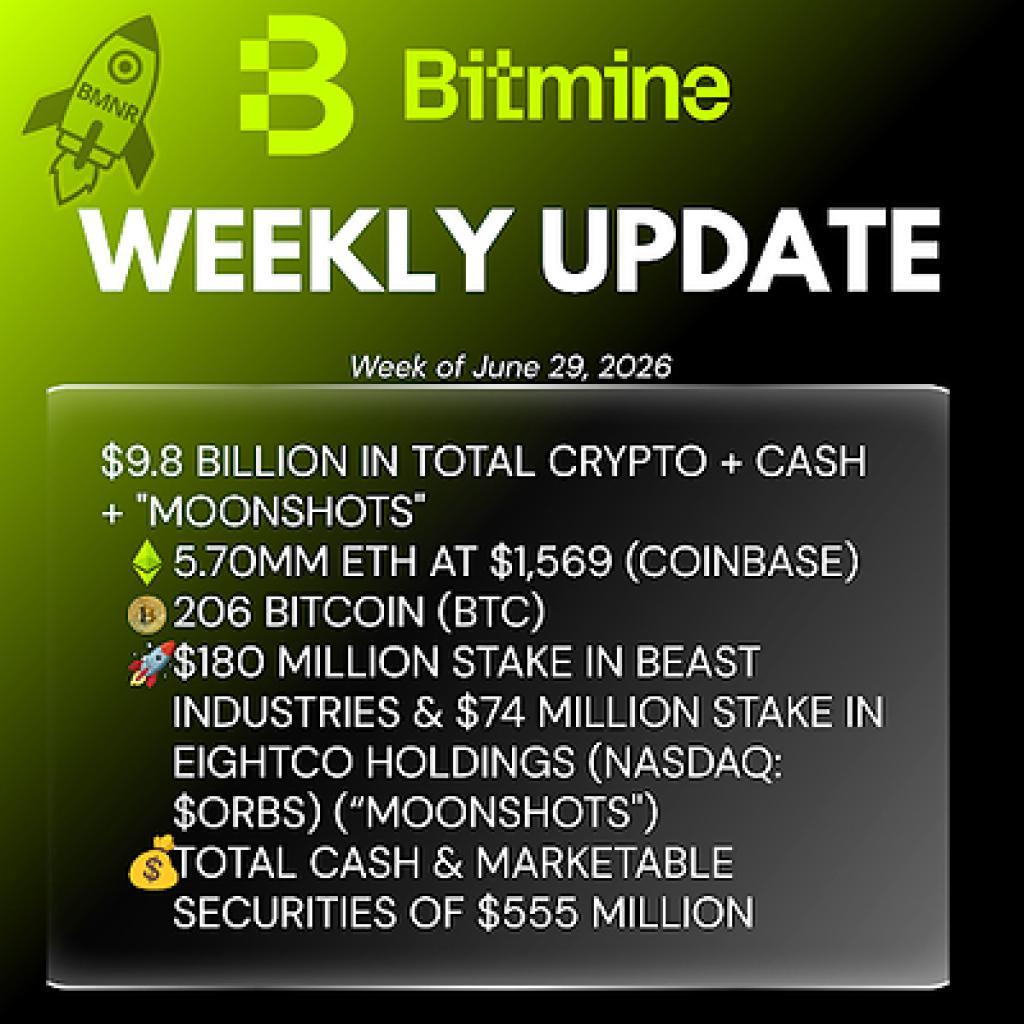
Bitmine Immersion Technologies (BMNR) Announces ETH Holdings Reach 5.70 Million Tokens, and Total Crypto and Total Cash Holdings of $9.8 Billion