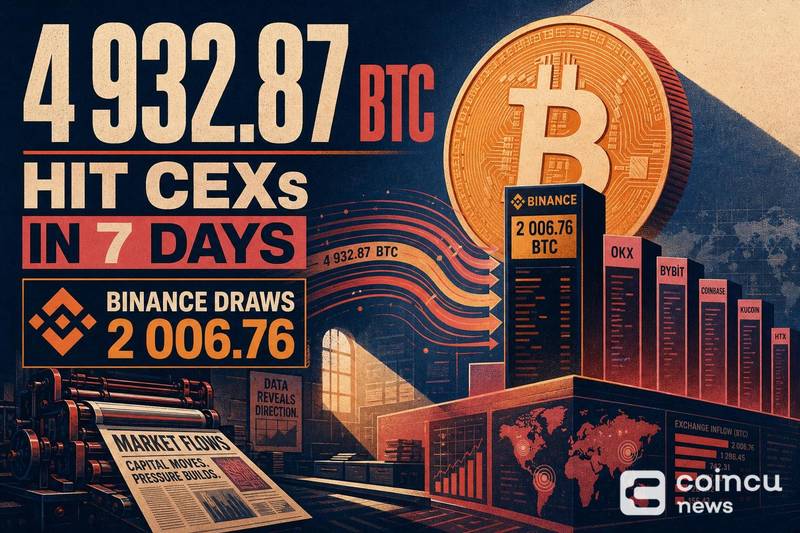
A total of 4,932.87 BTC flowed into centralized exchange platforms over the past seven days, with Binance alone absorbing 2,006.76 BTC of that total, representing roughly 40.7% of all tracked CEX inflows during the period.
What the Latest 7-Day BTC Inflow Data Shows
On-chain exchange flow tracking shows 4,932.87 BTC moved onto centralized exchange platforms in the past seven days. The figure captures net deposits to known exchange wallets across major platforms. For related coverage, see Crypto Fear & Greed Index at 24 Signals Extreme Fear in the Market.
Of that total, 2,006.76 BTC landed on Binance, according to CryptoQuant analysis noting that Binance continues to receive BTC while quiet accumulation patterns emerge elsewhere. For related coverage, see SARS Issues Crypto Tax Guidance in South Africa: What It Means.
The remaining roughly 2,926 BTC distributed across other tracked centralized exchanges during the same window.
Why Binance’s 40.7% Share of BTC Inflows Stands Out
Binance received approximately two-fifths of all BTC that moved onto CEX platforms in the seven-day period. That level of concentration on a single exchange is notable for traders monitoring potential distribution patterns.
A disproportionate share of inflows hitting one venue can reflect institutional positioning, large OTC settlement activity, or preparation for spot selling. However, inflows alone do not confirm any single outcome.
Binance’s dominance in this metric mirrors its broader position as the largest spot trading venue by volume, which naturally attracts a higher share of deposit activity. Traders watching for BTC liquidation risks on major CEXs often track exchange-specific inflow concentration as a leading signal.
What Traders May Watch Next After the BTC Inflow Increase
Short-term exchange inflow spikes can precede increased selling pressure, but they can also reflect routine rebalancing or collateral movements. The 4,932.87 BTC figure represents a data point, not a verdict.
Follow-through signals that traders typically monitor include whether inflows continue at the same pace in the following week, whether spot outflows offset the deposits, and whether Binance’s share remains elevated or normalizes.
Periods of sustained inflows without corresponding outflows have historically coincided with increased volatility. Market participants tracking crypto sentiment indicators alongside exchange flow data may find confirmation or divergence between the two datasets.
How to Read BTC Exchange Inflow Data Without Overreacting
Exchange inflows represent BTC moving from private wallets or cold storage onto platforms where it could be sold, used as collateral, or simply held. The act of depositing does not guarantee distribution.
The available data confirms inflow amounts and destination exchanges. It does not reveal the depositor’s intent, the time horizon for any potential sale, or whether the BTC was moved for trading, lending, or custody purposes.
A stronger directional conclusion would require pairing inflow data with outflow trends, order book depth, funding rates, and broader market structure context. The seven-day snapshot provides one input among many.
Exchanges like Coinbase expanding their platform strategies and Kraken adding new collateral types also highlight that exchange deposits serve increasingly diverse purposes beyond simple spot selling.
FAQ About BTC CEX Inflows and Binance Activity
What does BTC inflow to a CEX mean?
BTC inflow to a centralized exchange means Bitcoin has moved from external wallets onto exchange-controlled addresses. This makes the BTC available for trading, lending, or withdrawal but does not automatically mean it will be sold.
Do Binance inflows automatically imply selling pressure?
No. While exchange inflows can precede selling, they also reflect collateral deposits, OTC settlement, or internal treasury movements. The 2,006.76 BTC that moved to Binance could serve any of these purposes.
Why does the 7-day window matter for short-term market monitoring?
A seven-day window smooths out daily noise while remaining short enough to capture emerging trends. It helps distinguish between isolated large transfers and sustained directional flow patterns that may signal shifting market positioning.
Disclaimer: This article is for informational purposes only and does not constitute financial or investment advice. Cryptocurrency and digital asset markets carry significant risk. Always do your own research before making decisions.
No tags available.


Other Posts








- China, US Conclude Trade Talks with Focus on Cooperation
- Crypto Weekly: NYSE Backs OKX, Kraken Gets Fed Access, BTC Sells
- Court Upholds Fed’s Rejection of Custodia Bank’s Request
- DeriW Launches Edge Hour Trading Competition Platform for Derivatives Traders
- Former CFO Convicted for $35M Fraudulent Crypto Investment
- Michael Saylor Denies Bitcoin Sell-Off Amid Large BTC Transfer
- Buy Dogecoin on eToro: Step-by-Step Guide for Beginners (2024)
- Kazakhstan Explores Crypto Reserves Backed by National Funds
- JPMorgan Increases Holdings in BlackRock’s Bitcoin ETF
- Nordea Bank Introduces Bitcoin ETP Trading for Nordic Customers
- XRP Spot ETF Launches on Nasdaq Amid Market Fluctuations
- Peter Schiff Challenges Michael Saylor on MSTR’s Business Model
- Thailand Orders Worldcoin to Delete 1.2 Million Biometric Records
- UK Proposes New DeFi Tax Framework to Ease User Burden
- WLFI Under Fire: Analyst Warns Hyperliquid Could Be Next
- Ancient Ethereum Whale Moves $1.19 Billion After Decade
- BlackRock Receives Large Crypto Transfers from Coinbase
- SEC Scrutiny on ALT5 Sigma’s Leadership Disclosure Timing
- Yala Injects $5.5 Million Amid Recovery Efforts
- Radiant Capital Faces $50M Loss in Major Security Breach
- China, US Conclude Trade Talks with Focus on Cooperation
- Crypto Weekly: NYSE Backs OKX, Kraken Gets Fed Access, BTC Sells
- Court Upholds Fed’s Rejection of Custodia Bank’s Request
- DeriW Launches Edge Hour Trading Competition Platform for Derivatives Traders
- Former CFO Convicted for $35M Fraudulent Crypto Investment
- Michael Saylor Denies Bitcoin Sell-Off Amid Large BTC Transfer
- Buy Dogecoin on eToro: Step-by-Step Guide for Beginners (2024)
- Kazakhstan Explores Crypto Reserves Backed by National Funds
- JPMorgan Increases Holdings in BlackRock’s Bitcoin ETF
- Nordea Bank Introduces Bitcoin ETP Trading for Nordic Customers
- XRP Spot ETF Launches on Nasdaq Amid Market Fluctuations
- Peter Schiff Challenges Michael Saylor on MSTR’s Business Model
- Thailand Orders Worldcoin to Delete 1.2 Million Biometric Records
- UK Proposes New DeFi Tax Framework to Ease User Burden
- WLFI Under Fire: Analyst Warns Hyperliquid Could Be Next
- Ancient Ethereum Whale Moves $1.19 Billion After Decade
- BlackRock Receives Large Crypto Transfers from Coinbase
- SEC Scrutiny on ALT5 Sigma’s Leadership Disclosure Timing
- Yala Injects $5.5 Million Amid Recovery Efforts
- Radiant Capital Faces $50M Loss in Major Security Breach
- China, US Conclude Trade Talks with Focus on Cooperation
- Crypto Weekly: NYSE Backs OKX, Kraken Gets Fed Access, BTC Sells
- Court Upholds Fed’s Rejection of Custodia Bank’s Request
- DeriW Launches Edge Hour Trading Competition Platform for Derivatives Traders
- Former CFO Convicted for $35M Fraudulent Crypto Investment
- Michael Saylor Denies Bitcoin Sell-Off Amid Large BTC Transfer
- Buy Dogecoin on eToro: Step-by-Step Guide for Beginners (2024)
- Kazakhstan Explores Crypto Reserves Backed by National Funds
- JPMorgan Increases Holdings in BlackRock’s Bitcoin ETF
- Nordea Bank Introduces Bitcoin ETP Trading for Nordic Customers
- XRP Spot ETF Launches on Nasdaq Amid Market Fluctuations
- Peter Schiff Challenges Michael Saylor on MSTR’s Business Model
- Thailand Orders Worldcoin to Delete 1.2 Million Biometric Records
- UK Proposes New DeFi Tax Framework to Ease User Burden
- WLFI Under Fire: Analyst Warns Hyperliquid Could Be Next
- Ancient Ethereum Whale Moves $1.19 Billion After Decade
- BlackRock Receives Large Crypto Transfers from Coinbase
- SEC Scrutiny on ALT5 Sigma’s Leadership Disclosure Timing
- Yala Injects $5.5 Million Amid Recovery Efforts
- Radiant Capital Faces $50M Loss in Major Security Breach


Crypto Fear & Greed Index at 24 Signals Extreme Fear in the Market